Skull Bowl Item Number: Ee4.37 from the MOA: University of British Columbia

Description
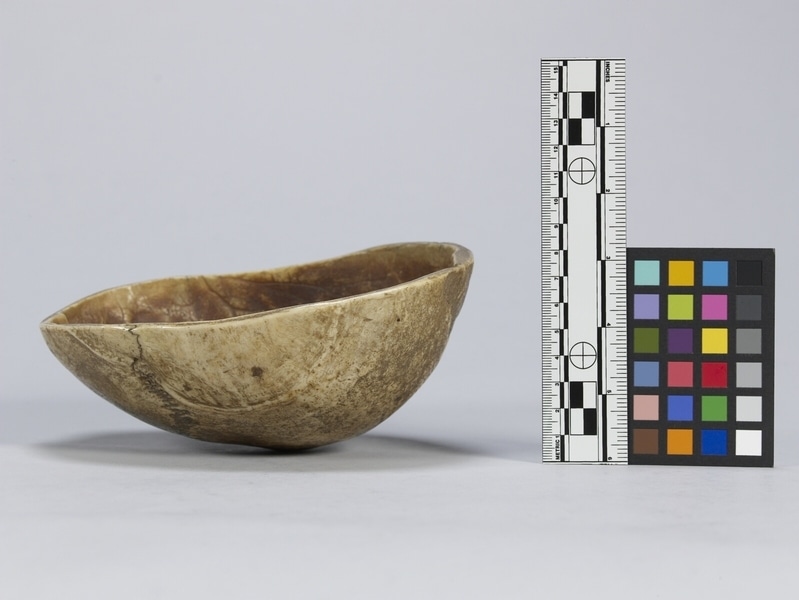
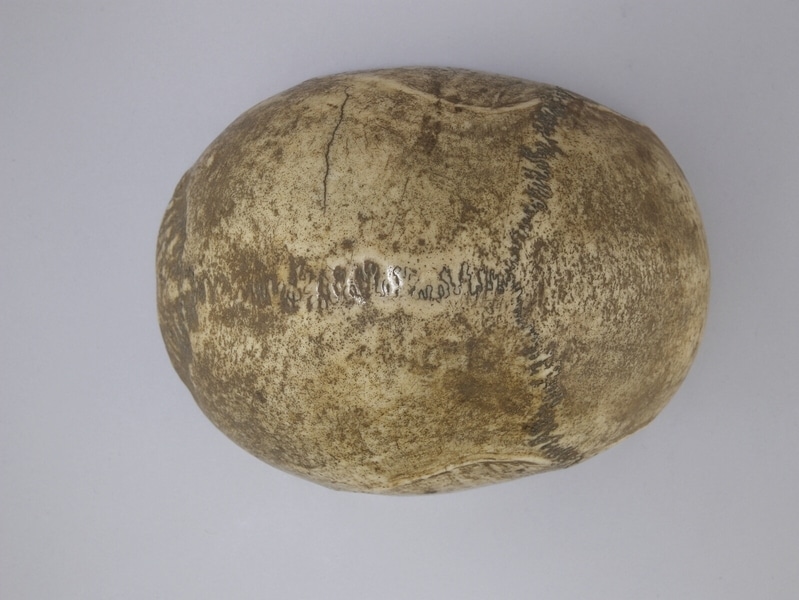
Ritual bowl known as kapala (ཀ་པ་ལ་) made from the top of a human skull.
History Of Use
Kapala (ཀ་པ་ལ་) is a ritual implement used in Tibetan Buddhism.
Cultural Context
Human remains in museum collections present a complex, ethical challenge. Objects made from human remains are often removed from their cultural context and have been misidentified or misunderstood, frequently without recognizing the significance they hold in cultures that use human bones for ritual and ceremonial purposes. Ritual objects made both from human and animal bones are a distinctive feature of Tibetan tantric Buddhism. To Tibetans, human bones serve as a reminder of life’s brevity and the inevitability of death. Bones have additional symbolic dimensions. Tibetans view skulls as natural containers that, unshaped by human hands, represent the inherent goodness that reflects the natural state of the mind. Tibetan Buddhists often donated their skulls and bones to monasteries in order to gain spiritual merit after their death.
Item History
- Made in Tibet
- Collected between 1890 and 1900
- Owned by Albert Poole, F. Abner Poole and Louise Eleanor Poole before March 15, 1982
- Received from Albert Poole (Donor), F. Abner Poole (Donor) and Louise Eleanor Poole (Donor) on March 15, 1982
What
- Name
- Skull Bowl
- Identification Number
- Ee4.37
- Type of Item
- bowl
- Material
- human bone
- Overall
- height 9.0 cm, width 13.3 cm, depth 17.4 cm
Who
- Culture
- Tibetan
- Previous Owner
- Albert Poole, F. Abner Poole and Louise Eleanor Poole
- Received from
- Albert Poole (Donor), F. Abner Poole (Donor) and Louise Eleanor Poole (Donor)
Where
- Holding Institution
- MOA: University of British Columbia
- Made in
- Tibet
When
- Collection Date
- between 1890 and 1900
- Ownership Date
- before March 15, 1982
- Acquisition Date
- on March 15, 1982
Other
- Condition
- good
- Current Location
- Case 81
- Accession Number
- 0787/0003