Prayer Wheel Item Number: 1431/14 a-e from the MOA: University of British Columbia

Description
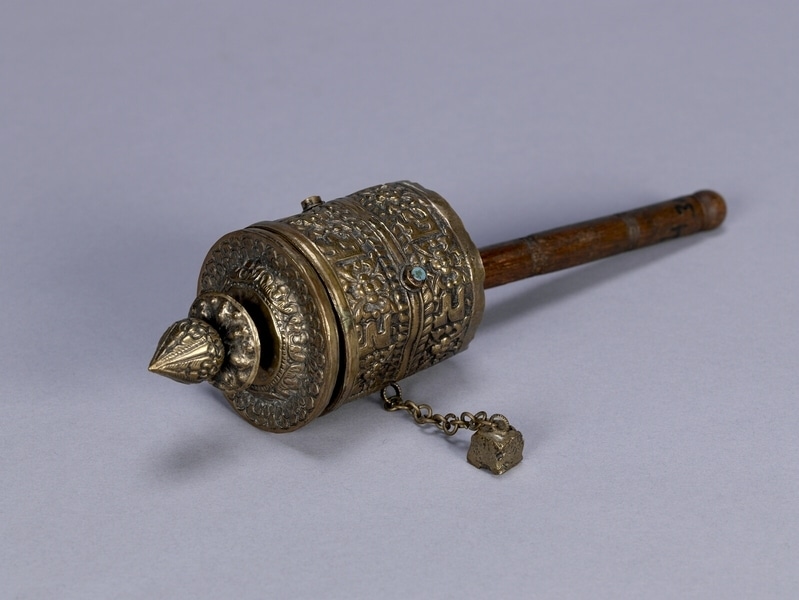
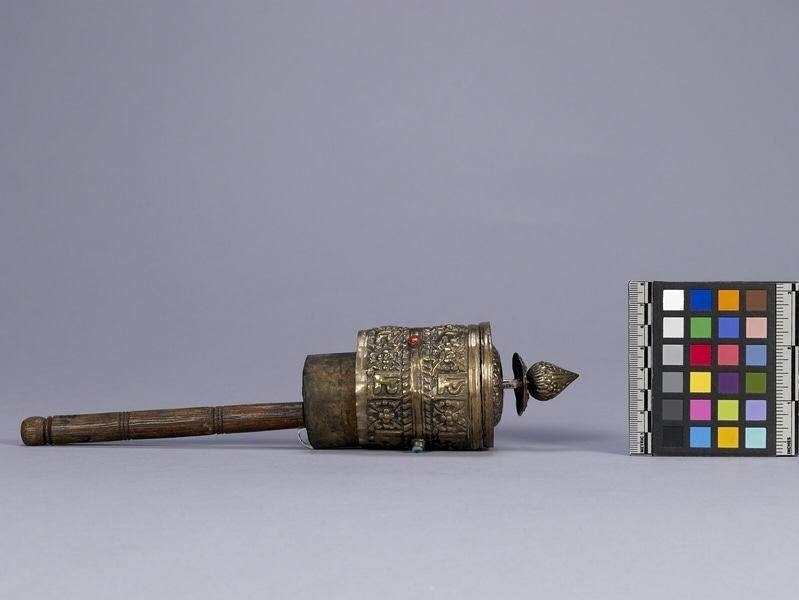
Tibetan prayer wheels are called mani khorlo (མ་ཎི་འཁོར་ལོ།). The first piece is a small rolled scroll (part a). The second piece is a metal cylinder (part b) with a lotus design in relief and a chain attached through a loop with a square weight at the end. The third piece is the cylinder lid (part c) which is a two-tiered circular metal piece. The fourth piece is a pointed cap (part d) which goes through the centre of the cylinder lid (part c). The last piece is the wood handle (part e) with a metal prong.
History Of Use
The handheld mani khorlo (མ་ཎི་འཁོར་ལོ།) or prayer wheel spins with the movement of the wrist, while the metal block on the short chain sustains the momentum. The wrapped spindle is known as the “life tree.” In spinning the wheel, the practitioner reaps the same benefits of having read the countless prayers coiled inside, a useful means for illiterate Buddhists to attain merit. The wheel should be spun clockwise to coincide with the sun’s movement and the direction of the writing on the wheel to facilitate the release of the blessings into the world.
Cultural Context
Mani khorlo (མ་ཎི་འཁོར་ལོ།) or prayer wheels are ritual objects used in Tibetan Buddhist culture.
Item History
- Made in Nepal and Tibet
- Owned by Moira Irvine before October 9, 1990
- Received from Moira Irvine (Donor) on October 9, 1990
What
- Name
- Prayer Wheel
- Identification Number
- 1431/14 a-e
- Type of Item
- prayer wheel
- Material
- metal, stone and wood
- Overall
- height 24.0 cm, diameter 6.0 cm
- Part A
- height 6.0 cm, diameter 4.7 cm
- Part B
- height 7.0 cm, diameter 7.0 cm
- Part C
- height 1.0 cm, diameter 6.0 cm
- Part D
- height 5.5 cm, diameter 3.0 cm
- Part E
- height 24.5 cm, diameter 1.5 cm
Who
- Culture
- Himalayas
- Previous Owner
- Moira Irvine
- Received from
- Moira Irvine (Donor)
Where
- Holding Institution
- MOA: University of British Columbia
- Made in
- Nepal and Tibet
When
- Ownership Date
- before October 9, 1990
- Acquisition Date
- on October 9, 1990
Other
- Item Classes
- metalwork
- Condition
- fair
- Accession Number
- 1431/0014 a-e