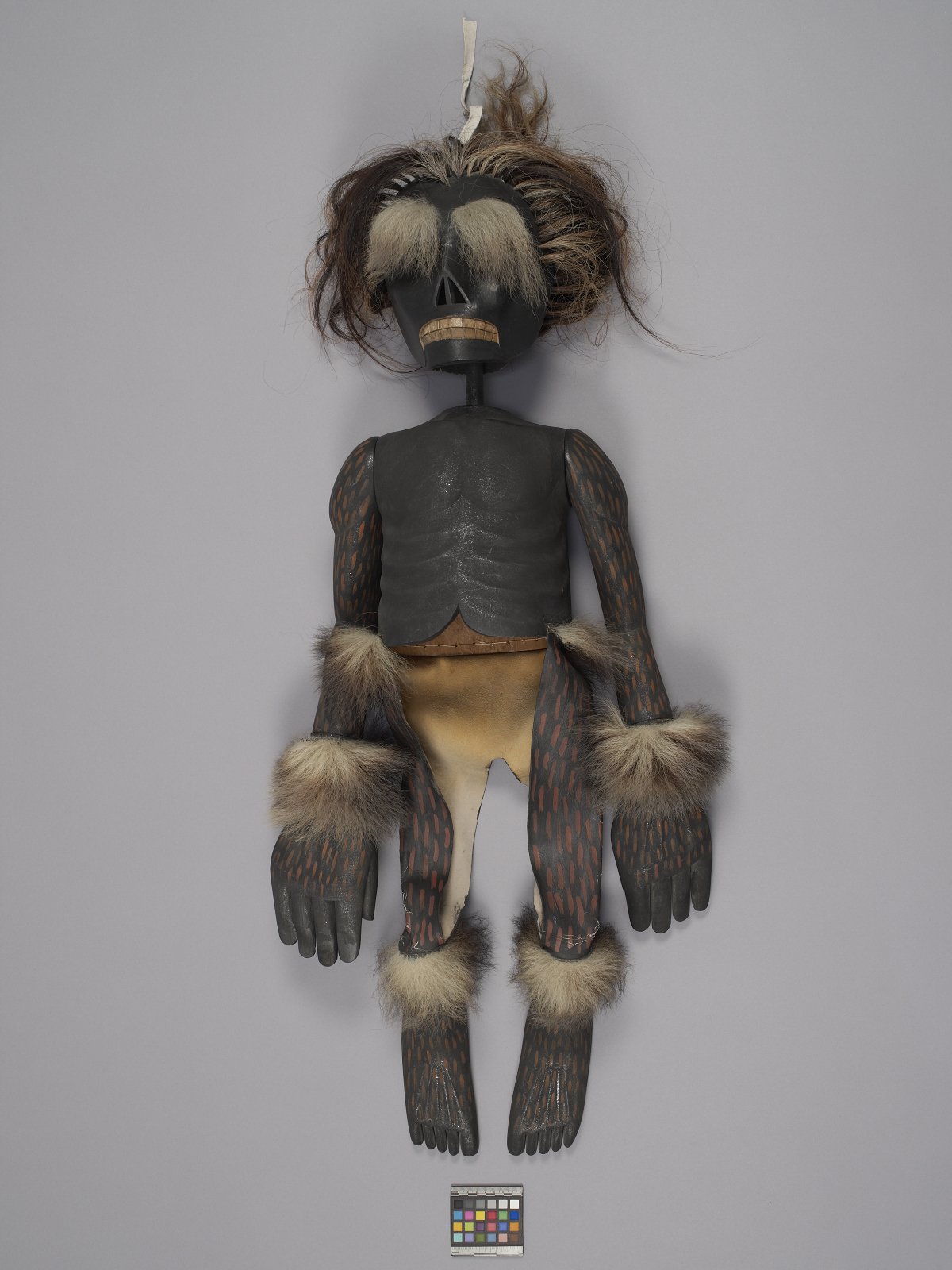
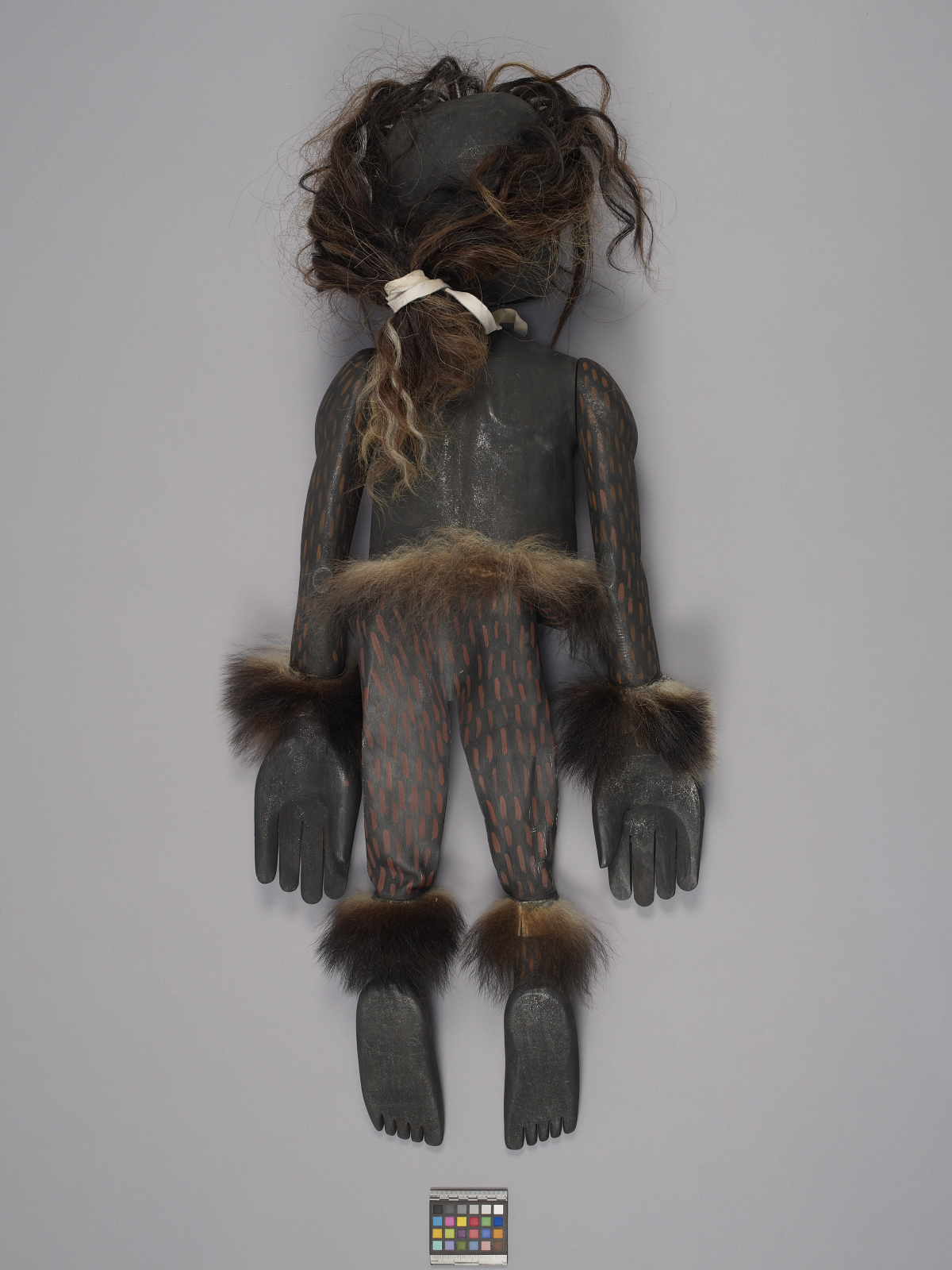
Cannibal Spirit Puppet
Item number 3217/1 a-b from the MOA: University of British Columbia.
Item number 3217/1 a-b from the MOA: University of British Columbia.
 Public
This page shows all the information we have about this item. Both the institution that physically holds this item, and RRN members have contributed the knowledge on this page. You’re looking at the item record provided by the holding institution. If you scroll further down the page, you’ll see the information from RRN members, and can share your own knowledge too.
The RRN processes the information it receives from each institution to make it more readable and easier to search. If you’re doing in-depth research on this item, be sure to take a look at the Data Source tab to see the information exactly as it was provided by the institution.
These records are easy to share because each has a unique web address. You can copy and paste the location from your browser’s address bar into an email, word document, or chat message to share this item with others.
This information was automatically generated from data provided by MOA: University of British Columbia. It has been standardized to aid in finding and grouping information within the RRN. Accuracy and meaning should be verified from the Data Source tab.
Olala. Large, painted, wooden puppet. The head is removable (part b). Legs (from torso to knees) are painted leather; upper body, arms, feet and head are painted wood. Fur additions at knees, wrists, sides and eyebrows. Long, full hair attachments on the head are tied together at the back (approx. 42 x 18 cm).
According to Margaret Blackman, Thompson started making Haida-inspired puppets in the mid-1980s, based on a piece in the Smithsonian collection, a 19th century headdress representing a corpse (see Bodies of Enchantment, Levell, p. 67.)
Donated by Richard Porter, courtesy of the Lattimer Gallery.
Said to represent the Haida cannibal spirit Olala (Dead Man).
Let the RRN community answer your questions
Public
With an account, you can ask other users a question about this item. Request an Account
Share your knowlege of this item with the RRN community
Public
With an account, you can submit information about this item and have it visible to all users and institutions on the RRN. Request an Account


 RRN ID