Lapel Pin
Item number 2023.O.026:01 from the Sto:lo Research & Resource Management Centre.
Item number 2023.O.026:01 from the Sto:lo Research & Resource Management Centre.
 Public
This page shows all the information we have about this item. Both the institution that physically holds this item, and RRN members have contributed the knowledge on this page. You’re looking at the item record provided by the holding institution. If you scroll further down the page, you’ll see the information from RRN members, and can share your own knowledge too.
The RRN processes the information it receives from each institution to make it more readable and easier to search. If you’re doing in-depth research on this item, be sure to take a look at the Data Source tab to see the information exactly as it was provided by the institution.
These records are easy to share because each has a unique web address. You can copy and paste the location from your browser’s address bar into an email, word document, or chat message to share this item with others.
This information was automatically generated from data provided by Sto:lo Research & Resource Management Centre. It has been standardized to aid in finding and grouping information within the RRN. Accuracy and meaning should be verified from the Data Source tab.
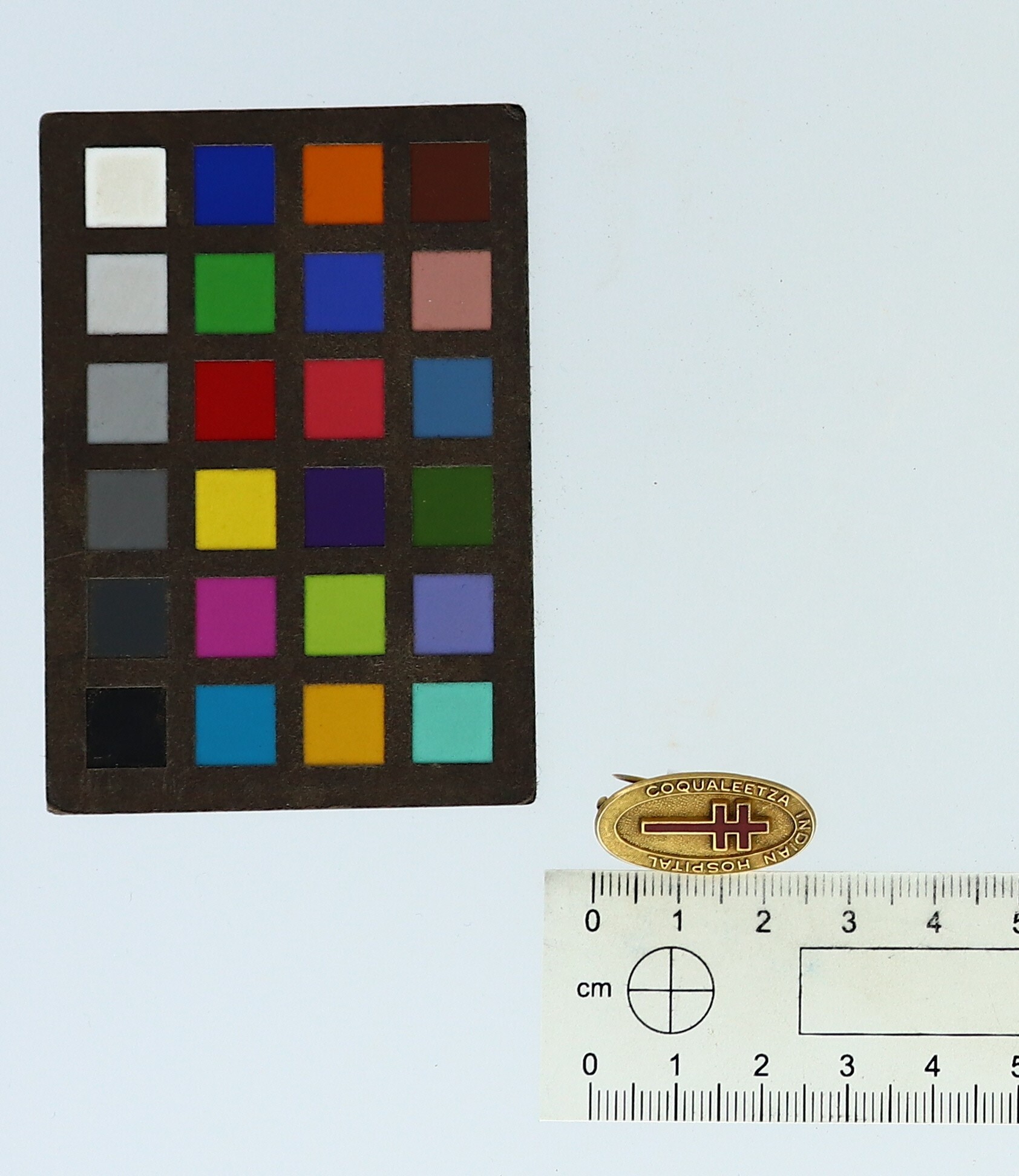
A small brass enamel nurses' pin with a red double-barred cross representing the International Union Against Tuberculosis and Lung Disease. The words 'Coqualeetza Indian Hospital' go around the outer edge of the pin. The Coqualeetza Indian hospital first opened in September, 1941. The institution was the first of it's kind for nearly a decade before Miller Bay and Nanaimo Indian Hospitals joined their efforts with Coqualeetza acting as a headquarters- storing important documents, and relaying T.B program information.
A nurse' lapel pin for the Coqualeetza Indian hospital, roughly from the 1940's.
The pin showcases the symbol for International Union Against T.B and Lung Disease, as well as the location; Coqualeetza Indian Hospital. There's an inscription on the back, which looks to read G. F with half circle symbols, each with a single tail pointed inwards, in between the letters.The first Coqualeetza indian hospital ran from 1886-1948, when a fire overtook the whole building. They reconstructed the hospital two years later, with more rooms and more staff.
With the high-demand for Coqualeetza's space, Miller Bay Indian Hospital and Nanaimo Indian Hospital followed suit nearly a decade later. These two hosptials worked hand-in-hand with Coqualeetza acting as a headquarters' for the three locations; storing important documents, and relaying important T.B practices and information.
No provenance- Pin was collected by an SRRMC member who bought the pin off Facebook Marketplace.
Let the RRN community answer your questions
Public
With an account, you can ask other users a question about this item. Request an Account
Share your knowlege of this item with the RRN community
Public
With an account, you can submit information about this item and have it visible to all users and institutions on the RRN. Request an Account


 RRN ID