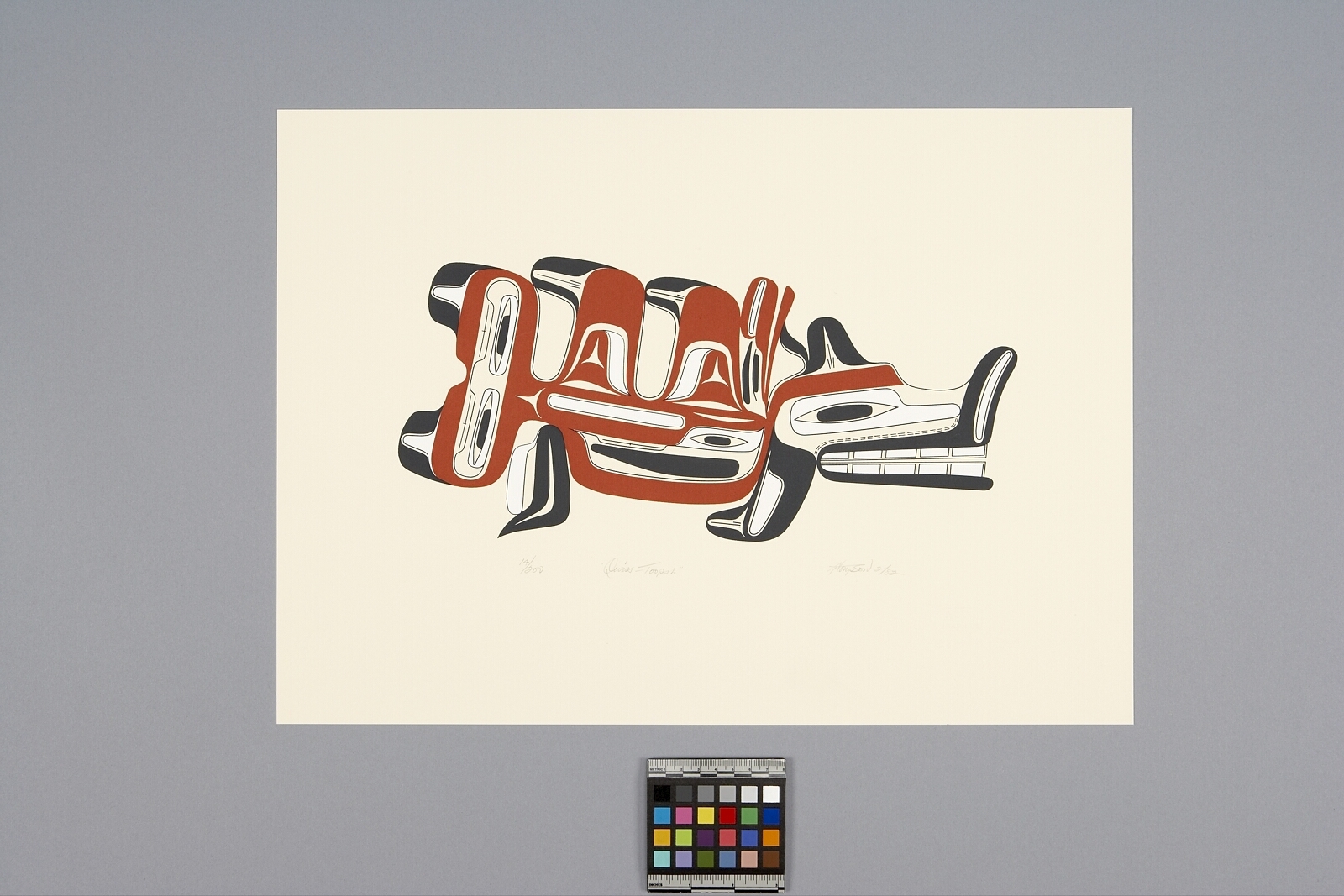
Qwiss-Toopsh
Item number Nb11.304 from the MOA: University of British Columbia.
Item number Nb11.304 from the MOA: University of British Columbia.
 Public
This page shows all the information we have about this item. Both the institution that physically holds this item, and RRN members have contributed the knowledge on this page. You’re looking at the item record provided by the holding institution. If you scroll further down the page, you’ll see the information from RRN members, and can share your own knowledge too.
The RRN processes the information it receives from each institution to make it more readable and easier to search. If you’re doing in-depth research on this item, be sure to take a look at the Data Source tab to see the information exactly as it was provided by the institution.
These records are easy to share because each has a unique web address. You can copy and paste the location from your browser’s address bar into an email, word document, or chat message to share this item with others.
This information was automatically generated from data provided by MOA: University of British Columbia. It has been standardized to aid in finding and grouping information within the RRN. Accuracy and meaning should be verified from the Data Source tab.
A main design consisting of a stylized profile figure. Head on the right has two slightly parted even rows of white teeth surrounded by a thin back outline. The large nose and mouth are black. Solid black oval eye is surrounded by white. Fin-like shape below the left side of the eye. Ear above is a split u with a short line with shorter lines on either side, in split. The eyebrow, body, and part of the tail are in red-brown form lines. Two large red-brown u forms with interior detail appear as humps along the back and curve over at the top to black u-forms. Eye shape and ovoids are along body. Two fluked tail on the left with two eye shapes. Pencil inscription along the bottom edge reads '14/200 Qwiss-toopsh A Thompson 2/82'. There is an embossed stamp on the right bottom that reads 'Open Pacific Graphics'. The print is on a horizontally rectangular, light brown paper piece.
Northwest Coast serigraphs are a contemporary art form, deriving from early 20th century drawings of traditional crest and decorative designs, commissioned by anthropologists and undertaken by artists such as Charles Edenshaw. Residential schools reinforced the medium, while discouraging the use of traditional themes. An important series of traditional designs in coloured pencil and watercolour were done by Mungo Martin for UBC in 1949-50. The 1960's saw the rapid growth of prints, first in unlimited poster editions, and later with the establishment of the Gitanmaax School of Northwest Coast Indian Art at 'Ksan (1967), and of the Northwest Coast Indian Artists Guild (1977), limited edition art runs became the standard. Northwest Coast silkscreen prints are part of the mainstream art market, as well as, functioning within the native context as potlatch gifts, and commemorative prints. Although, there are distinctive regional styles, individual artists may work in several styles, or apply unique themes and variations to specific works.
contemporary art
Let the RRN community answer your questions
Public
With an account, you can ask other users a question about this item. Request an Account
Share your knowlege of this item with the RRN community
Public
With an account, you can submit information about this item and have it visible to all users and institutions on the RRN. Request an Account


 RRN ID