Feast Dish
Item number A4492 from the MOA: University of British Columbia.
Item number A4492 from the MOA: University of British Columbia.
 Public
This page shows all the information we have about this item. Both the institution that physically holds this item, and RRN members have contributed the knowledge on this page. You’re looking at the item record provided by the holding institution. If you scroll further down the page, you’ll see the information from RRN members, and can share your own knowledge too.
The RRN processes the information it receives from each institution to make it more readable and easier to search. If you’re doing in-depth research on this item, be sure to take a look at the Data Source tab to see the information exactly as it was provided by the institution.
These records are easy to share because each has a unique web address. You can copy and paste the location from your browser’s address bar into an email, word document, or chat message to share this item with others.
This information was automatically generated from data provided by MOA: University of British Columbia. It has been standardized to aid in finding and grouping information within the RRN. Accuracy and meaning should be verified from the Data Source tab.
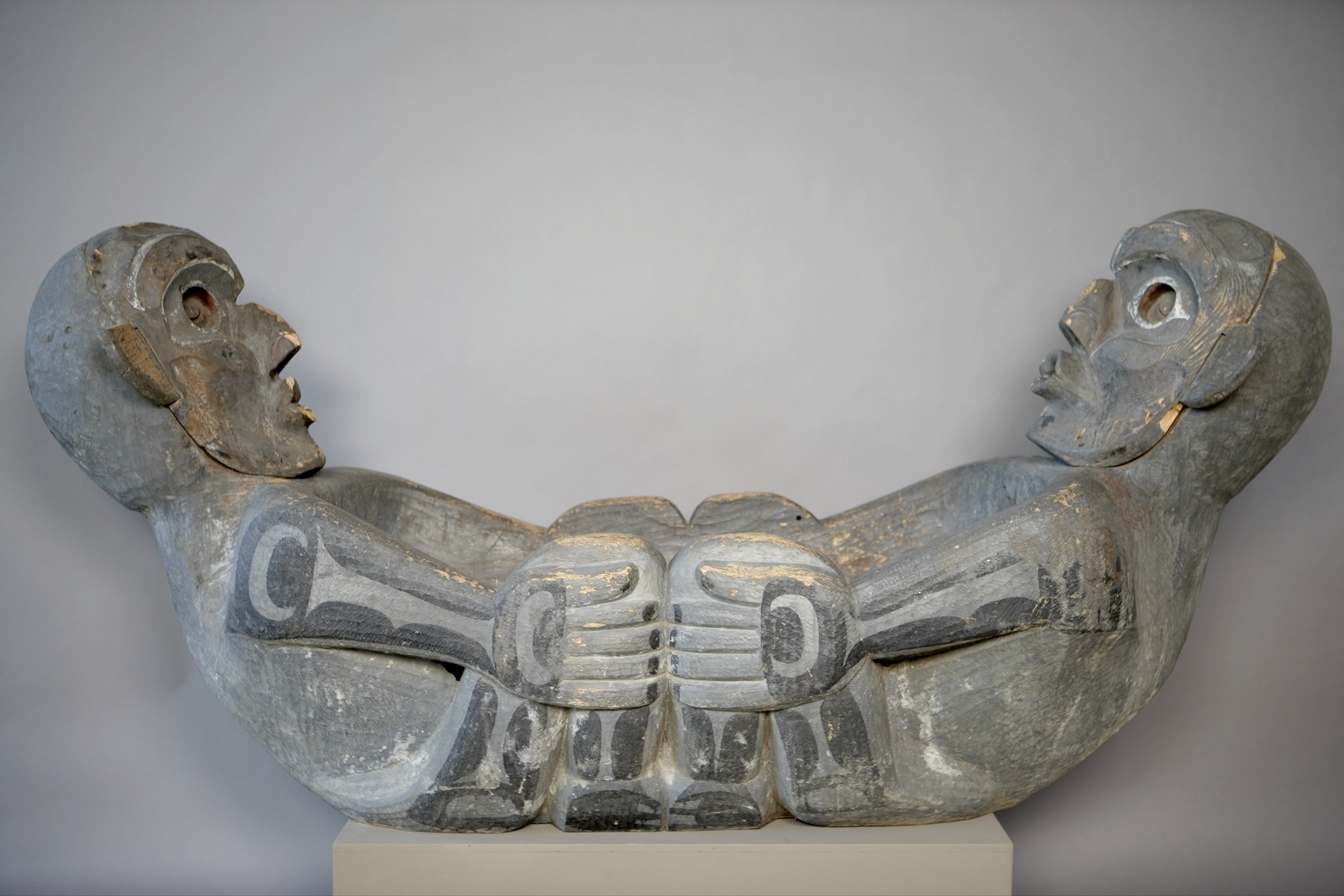
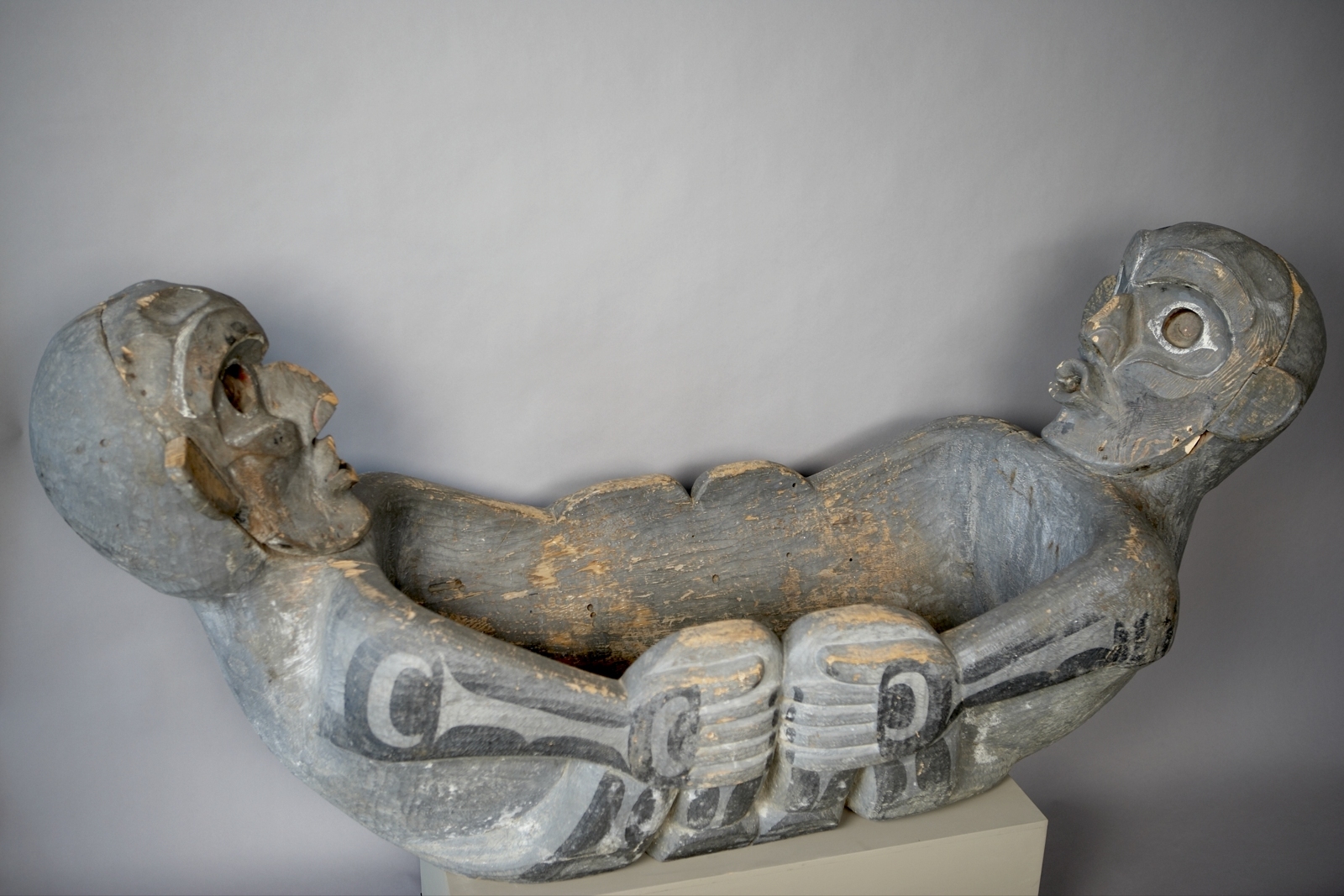
Large, wooden feast dish carved in the form of two matching, slightly-reclined Dzunuk'wa figures. They face each other with their hands clutching their bent legs; deeply hollowed centre. Thick black lines, painted over a grey background outline the anatomical forms. Mask-like faces are nailed onto hollow heads. Protruding ears are attached separately. Their lips are pursed and protrude, red eyes are recessed, large black defined eyebrows and high cheekbones are carved into faces.
Large feast dishes were used primarily to hold food served to guests at winter dance ceremonies and potlatches, as well as on other important social occasions. They also served as symbols of wealth and prestige. The figures represented on feast dishes were family crests and privileges. Important feast bowls were named.
ceremonial; potlatch; status
Pursed lips indicate Dzunuk'wa (or Tsonoqua), a member of a family of giants believed to have lived far in the woods. She was reported to be both powerful and wealthy, as well as slow and stupid. She was reported to steal children; her lips are red from their blood. Her recessed eyes indicate that she cannot see well. Crescents in her eyes indicate she is blind or asleep.
According to Rita Barnes (Kwakwaka’wakw elder, 2002) the dish was once transferred as dowry from the Kwikwasutinexw Gwa’yasdams (Gilford Island) to the Dzawada’enuxw village of Gwa’yi (Kingcome Inlet). In 1985 a visitor to MOA, Mrs. Ethel Dawson, said the dish had been owned and carved by Herbert Johnson, her grandfather.
Let the RRN community answer your questions
Public
With an account, you can ask other users a question about this item. Request an Account
Share your knowlege of this item with the RRN community
Public
With an account, you can submit information about this item and have it visible to all users and institutions on the RRN. Request an Account


 RRN ID