Prayer Wheel
Item number Ee4.63 a-d from the MOA: University of British Columbia.
Item number Ee4.63 a-d from the MOA: University of British Columbia.
 Public
This page shows all the information we have about this item. Both the institution that physically holds this item, and RRN members have contributed the knowledge on this page. You’re looking at the item record provided by the holding institution. If you scroll further down the page, you’ll see the information from RRN members, and can share your own knowledge too.
The RRN processes the information it receives from each institution to make it more readable and easier to search. If you’re doing in-depth research on this item, be sure to take a look at the Data Source tab to see the information exactly as it was provided by the institution.
These records are easy to share because each has a unique web address. You can copy and paste the location from your browser’s address bar into an email, word document, or chat message to share this item with others.
This information was automatically generated from data provided by MOA: University of British Columbia. It has been standardized to aid in finding and grouping information within the RRN. Accuracy and meaning should be verified from the Data Source tab.
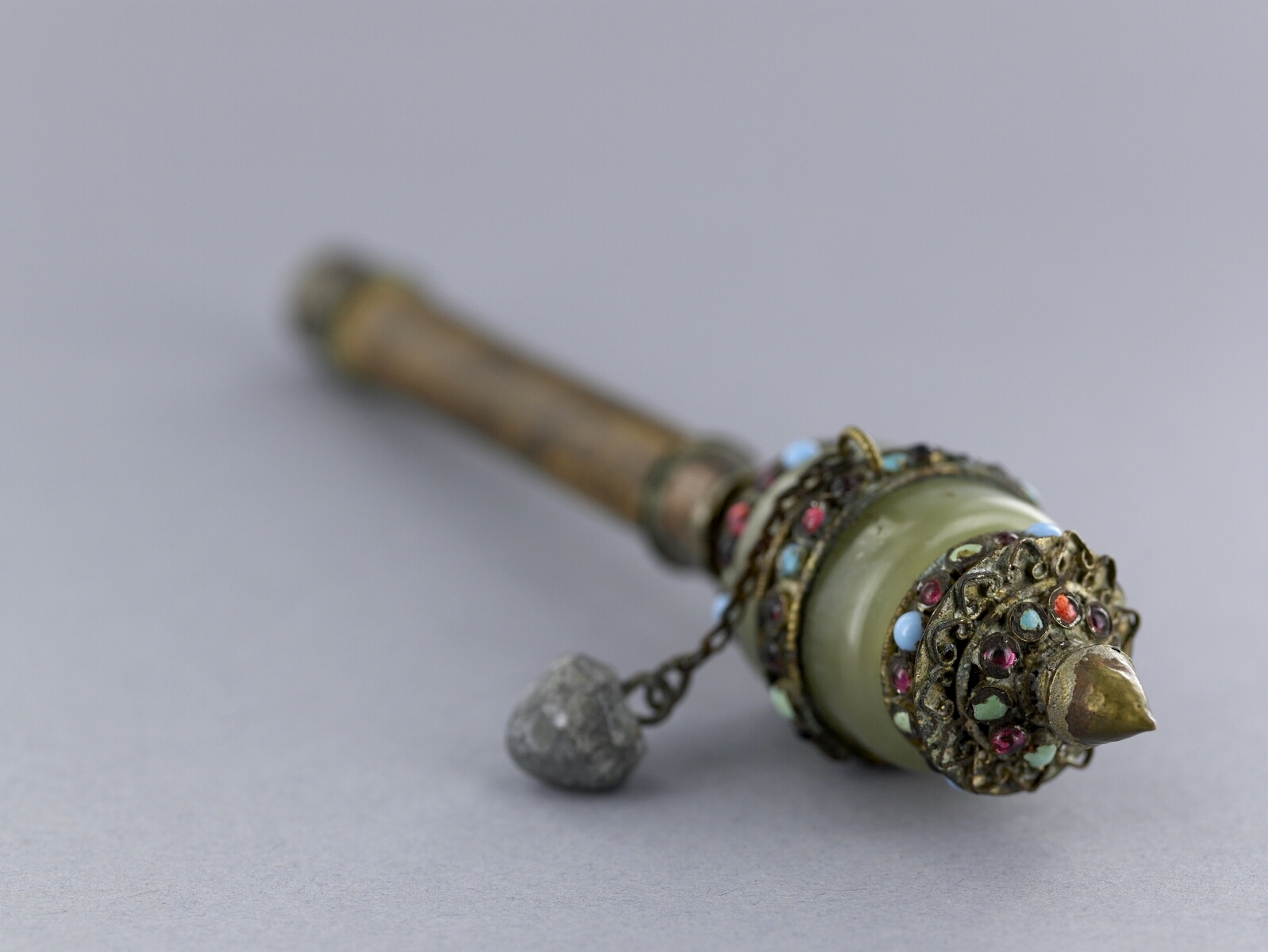
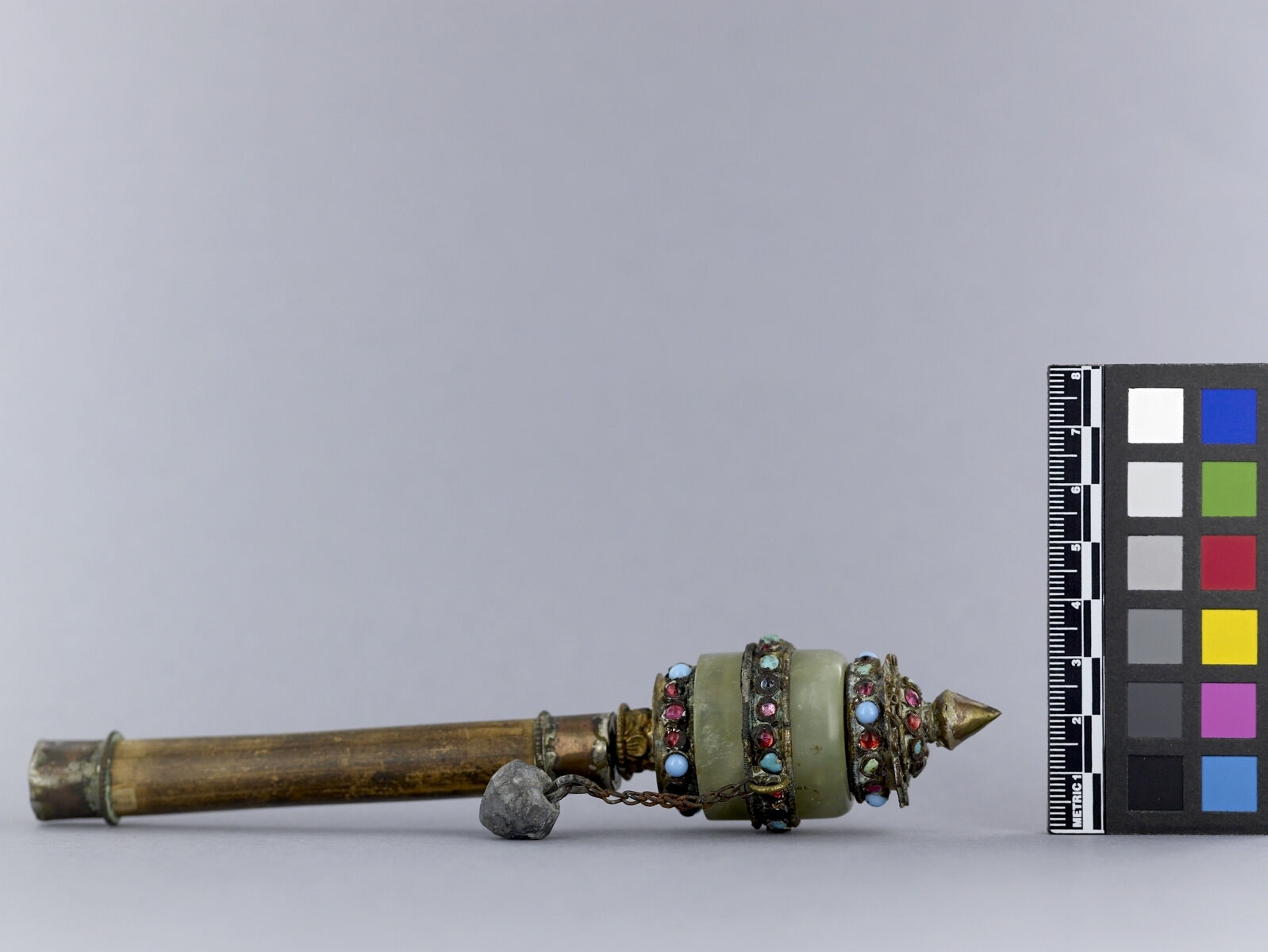
Tibetan prayer wheels are called mani khorlo (མ་ཎི་འཁོར་ལོ།). This mani khorlo has a wooden handle and metal pin (part a). A metal and jade wheel (part b) with two tiers of inlaid glass sits over the pin, with a ball and chain that hangs to one side. Inside the wheel is a rolled paper (part d) with writing on it. At the top of the prayer wheel sits a metal conical top (part c) with metal decorations and two tiers of inlaid glass.
The handheld mani khorlo (མ་ཎི་འཁོར་ལོ།) or prayer wheel spins with the movement of the wrist, while the stone on the short chain sustains the momentum. The wrapped spindle is known as the “life tree.” In spinning the wheel, the practitioner reaps the same benefits of having read the countless prayers coiled inside, a useful means for illiterate Buddhists to attain merit. The wheel should be spun clockwise to coincide with the sun’s movement and the direction of the writing on the wheel to facilitate the release of the blessings into the world.
Mani khorlo (མ་ཎི་འཁོར་ལོ།) or prayer wheels are ritual objects used in Tibetan Buddhist culture.
Let the RRN community answer your questions
Public
With an account, you can ask other users a question about this item. Request an Account
Share your knowlege of this item with the RRN community
Public
With an account, you can submit information about this item and have it visible to all users and institutions on the RRN. Request an Account


 RRN ID