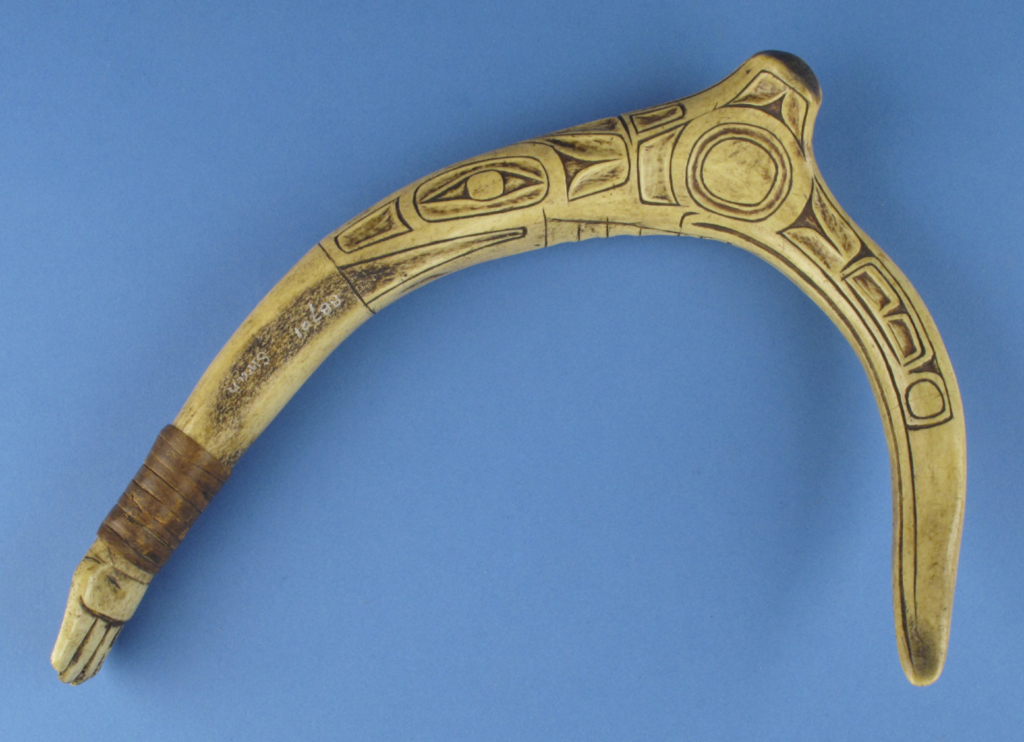
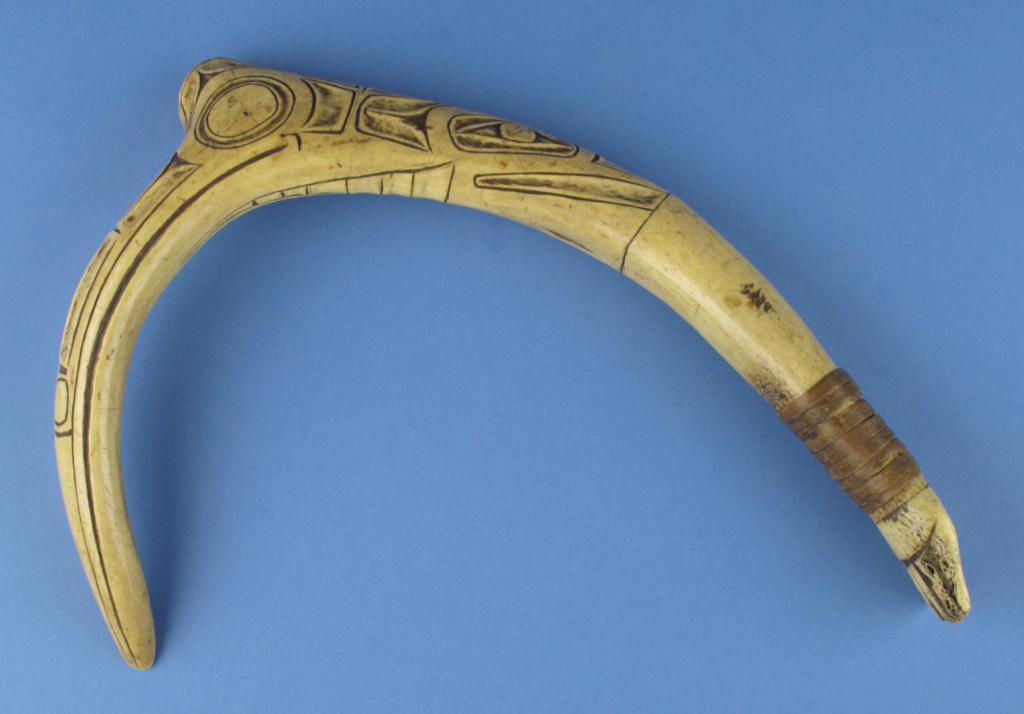
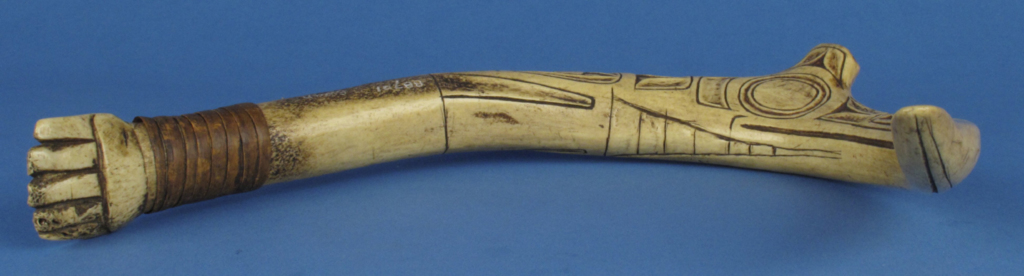
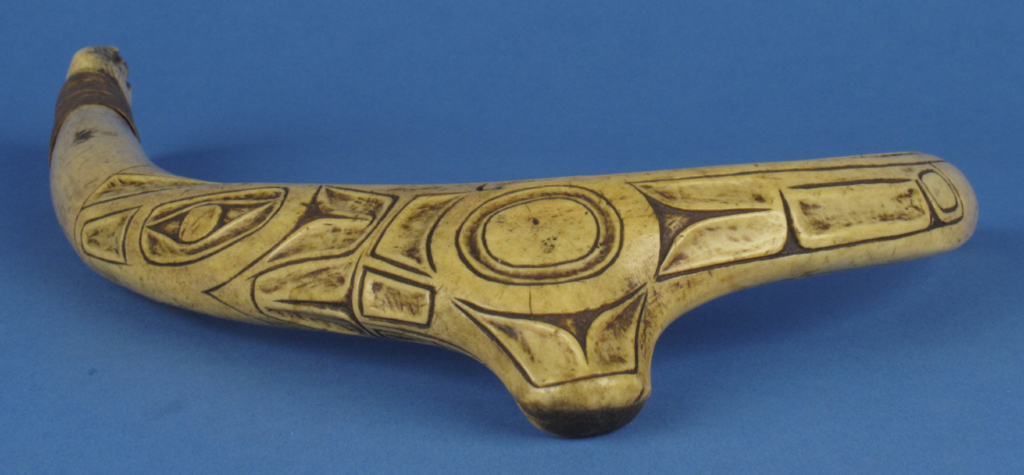
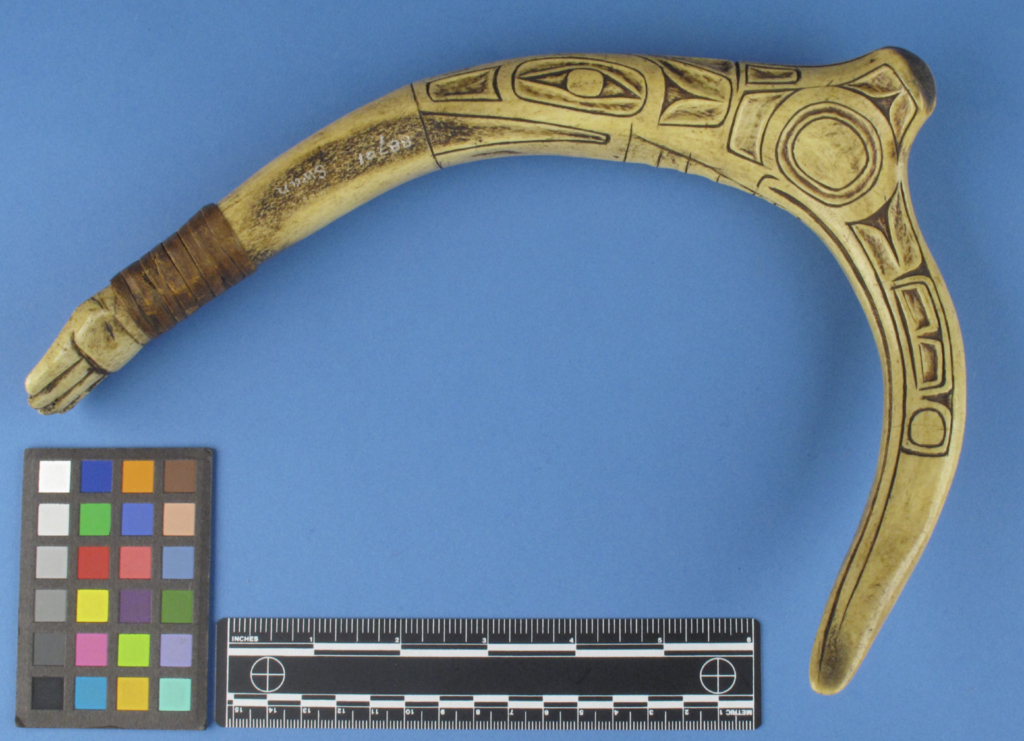
Weapon For Killing Slaves, Prong Of Deer Antler
Item number E88701-0 from the National Museum of Natural History.
Item number E88701-0 from the National Museum of Natural History.
 Public
This page shows all the information we have about this item. Both the institution that physically holds this item, and RRN members have contributed the knowledge on this page. You’re looking at the item record provided by the holding institution. If you scroll further down the page, you’ll see the information from RRN members, and can share your own knowledge too.
The RRN processes the information it receives from each institution to make it more readable and easier to search. If you’re doing in-depth research on this item, be sure to take a look at the Data Source tab to see the information exactly as it was provided by the institution.
These records are easy to share because each has a unique web address. You can copy and paste the location from your browser’s address bar into an email, word document, or chat message to share this item with others.
This information was automatically generated from data provided by National Museum of Natural History. It has been standardized to aid in finding and grouping information within the RRN. Accuracy and meaning should be verified from the Data Source tab.
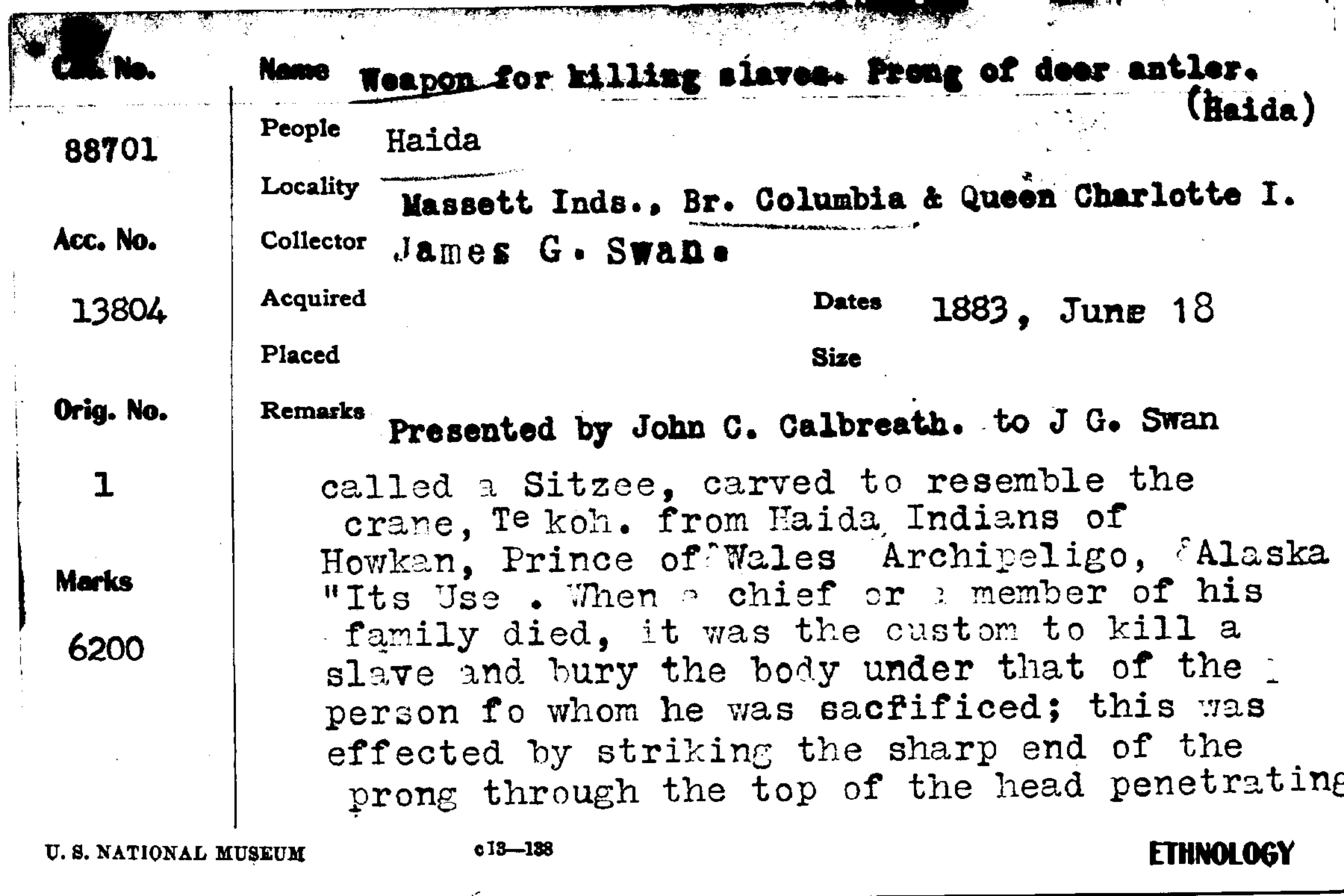
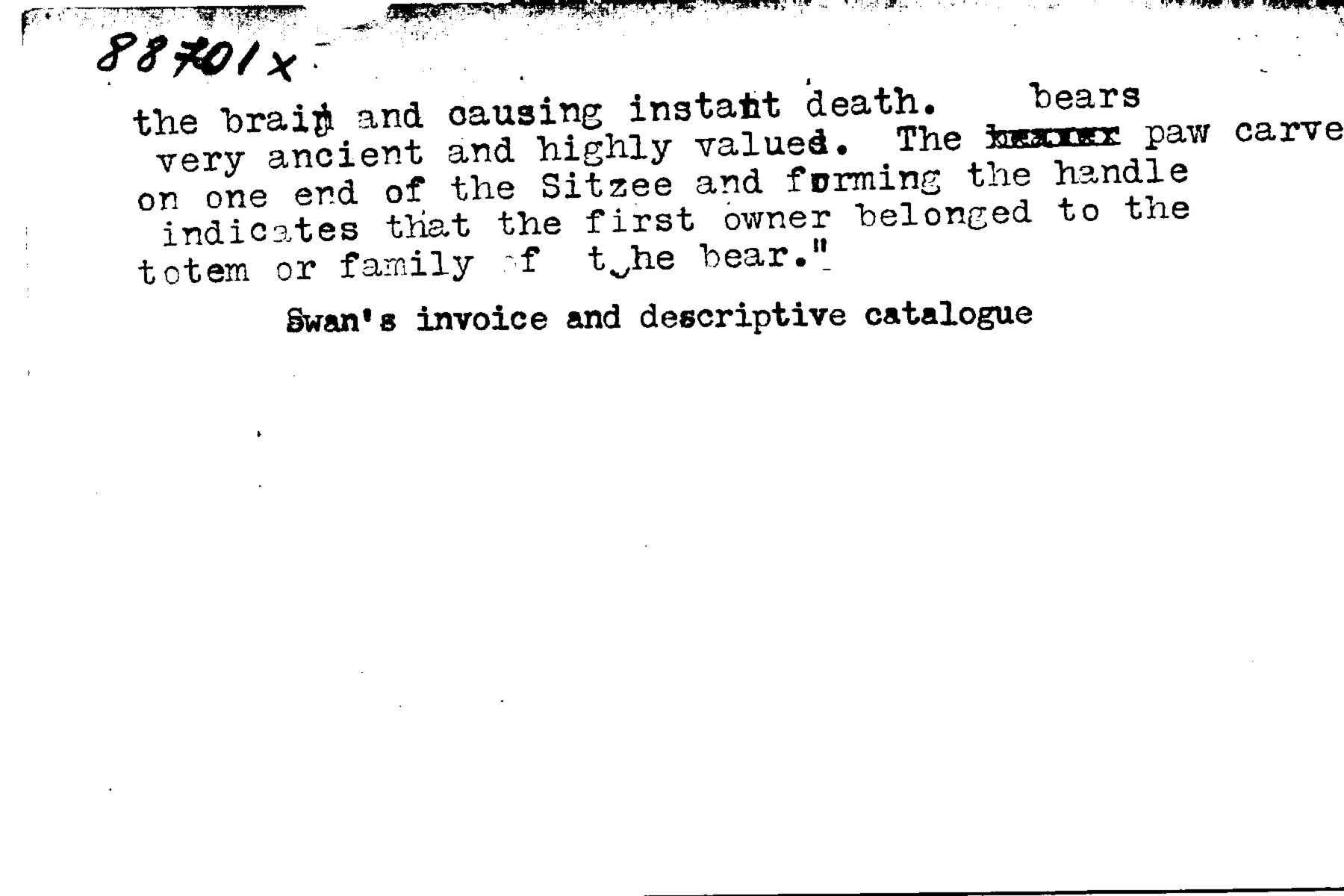
From card: "Presented by John C. Calbreath. to J G. Swan. Called a Sitzee, carved to resemble the crane, Te koh. from Haida Indians of Howkan, Prince of Wales Archipeligo, Alaska. "Its use. When a chief or a member of his family died, it was the custom to kill a slave and bury the body under that of the person for whom he was sacrificed; this was effected by striking the sharp end of the prong through the top of the head penetrating the brain and causing instant death. bears very ancient and highly valued. The paw carved on one end of the Sitzee and forming the handle indicates that the first owner belonged to the totem or family of the bear." - Swan's invoice and descriptive catalogue." Illus. Pl. XLVI, Fig. 261, p. 320 in USNM A.R. for 1888. Publication caption identifies as: "Made from a deer antler, and carved to represent the head of Tl'koh, the crane; the handle represents a bear's paw."
Let the RRN community answer your questions
Public
With an account, you can ask other users a question about this item. Request an Account
Share your knowlege of this item with the RRN community
Public
With an account, you can submit information about this item and have it visible to all users and institutions on the RRN. Request an Account


 RRN ID