Panel
Item number 1198/5 from the MOA: University of British Columbia.
Item number 1198/5 from the MOA: University of British Columbia.
 Public
This page shows all the information we have about this item. Both the institution that physically holds this item, and RRN members have contributed the knowledge on this page. You’re looking at the item record provided by the holding institution. If you scroll further down the page, you’ll see the information from RRN members, and can share your own knowledge too.
The RRN processes the information it receives from each institution to make it more readable and easier to search. If you’re doing in-depth research on this item, be sure to take a look at the Data Source tab to see the information exactly as it was provided by the institution.
These records are easy to share because each has a unique web address. You can copy and paste the location from your browser’s address bar into an email, word document, or chat message to share this item with others.
This information was automatically generated from data provided by MOA: University of British Columbia. It has been standardized to aid in finding and grouping information within the RRN. Accuracy and meaning should be verified from the Data Source tab.
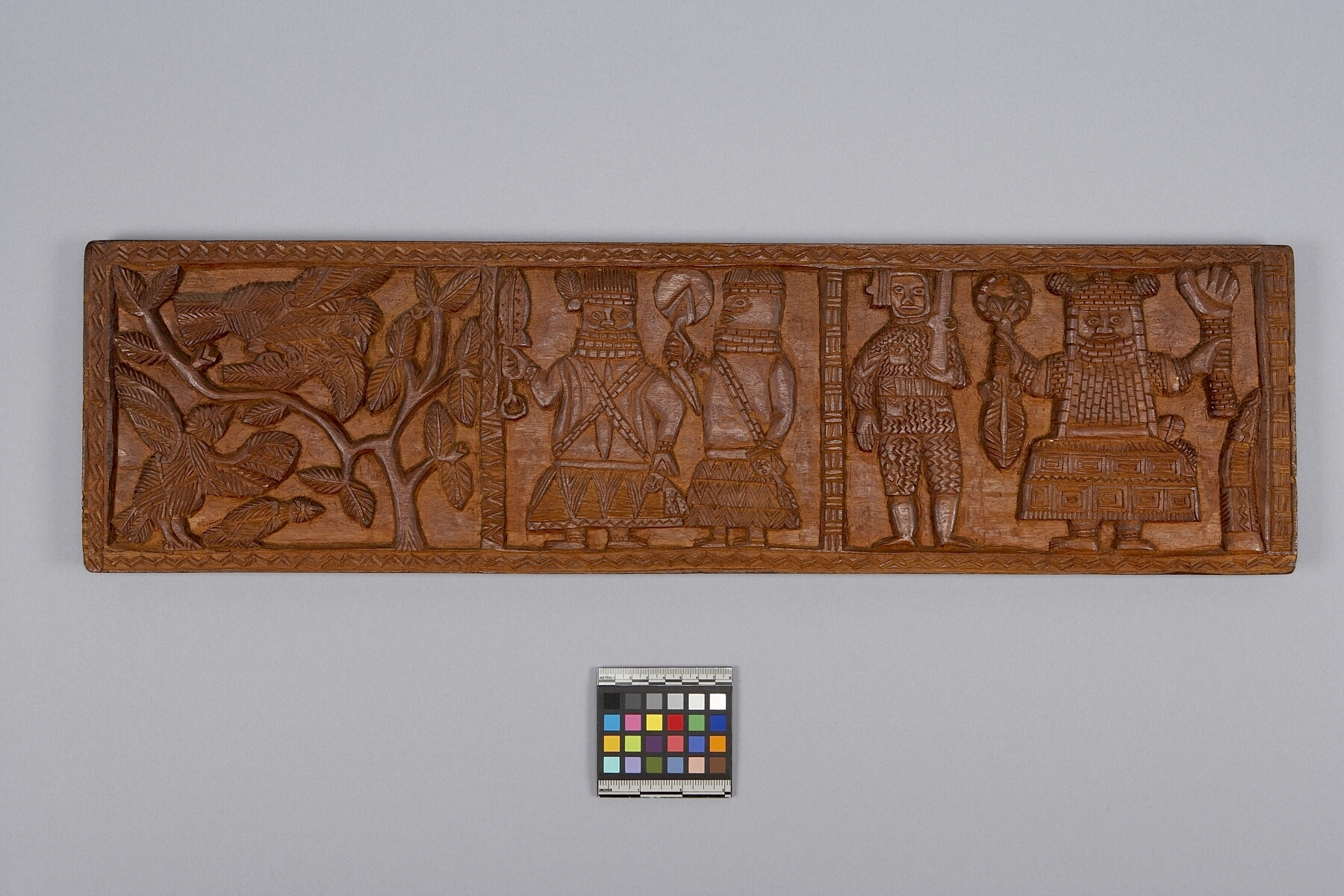
Wooden panel or plaque. Rectangular piece of carved wood, with a zigzag patterned frame carved in relief. Divided into three distinct carved scenes by two evenly spaced geometric carved lines. The first section of the panel depicts two large birds and one small bird flying among tree branches and leaves. The centre section of the panel depicts two human figures standing upright, one facing ahead and one turned to the side to face the other figure. Both are holding items in their right hand. The last section of the panel depicts two figures standing upright, both facing ahead, with one figure holding an item in his left hand and the other figure holding items in both hands. The garments worn by the human figures are elaborately engraved with geometric patterns.
This wooden panel is part of a tradition of historical documentation that originally came from the historical Benin Kingdom. Similar to the style and composition of the famous Benin bronze plaques, wooden panels depict historical events and traditions, and they contain stories, moments and motifs.
This plaque comprises three distinct storylines. On the left is ahianmwe-oro, the “Benin bird of prophecy.” Here it symbolizes the prophesied doom and defeat to Prince Osawe when he battled his older brother Arhuaruan over succession. With the help of his mother, Idia ni Esigie, Prince Osawe was victorious and became Oba Esigie, King of Benin. In the centre he is portrayed as the Oba with coral beads. Finally, the section to the right describes the help Oba Esigie received from Portuguese soldiers in defeating his enemies. He was the first oba to create a diplomatic relationship with a Western power. He holds an ikegobo in his left hand: a sort of trophy symbolizing his triumph over the ahianmwe-oro.
This panel was previously owned by the donor's father, Reverend Banfield, who was a missionary, mainly in West Africa, from 1901 to c. 1930. He worked for many years among the Nupe people in interior Nigeria.
Carved using subtractive technique.
Let the RRN community answer your questions
Public
With an account, you can ask other users a question about this item. Request an Account
Share your knowlege of this item with the RRN community
Public
With an account, you can submit information about this item and have it visible to all users and institutions on the RRN. Request an Account


 RRN ID