Bone Ornament
Item number Ee4.36 from the MOA: University of British Columbia.
Item number Ee4.36 from the MOA: University of British Columbia.
 Public
This page shows all the information we have about this item. Both the institution that physically holds this item, and RRN members have contributed the knowledge on this page. You’re looking at the item record provided by the holding institution. If you scroll further down the page, you’ll see the information from RRN members, and can share your own knowledge too.
The RRN processes the information it receives from each institution to make it more readable and easier to search. If you’re doing in-depth research on this item, be sure to take a look at the Data Source tab to see the information exactly as it was provided by the institution.
These records are easy to share because each has a unique web address. You can copy and paste the location from your browser’s address bar into an email, word document, or chat message to share this item with others.
This information was automatically generated from data provided by MOA: University of British Columbia. It has been standardized to aid in finding and grouping information within the RRN. Accuracy and meaning should be verified from the Data Source tab.
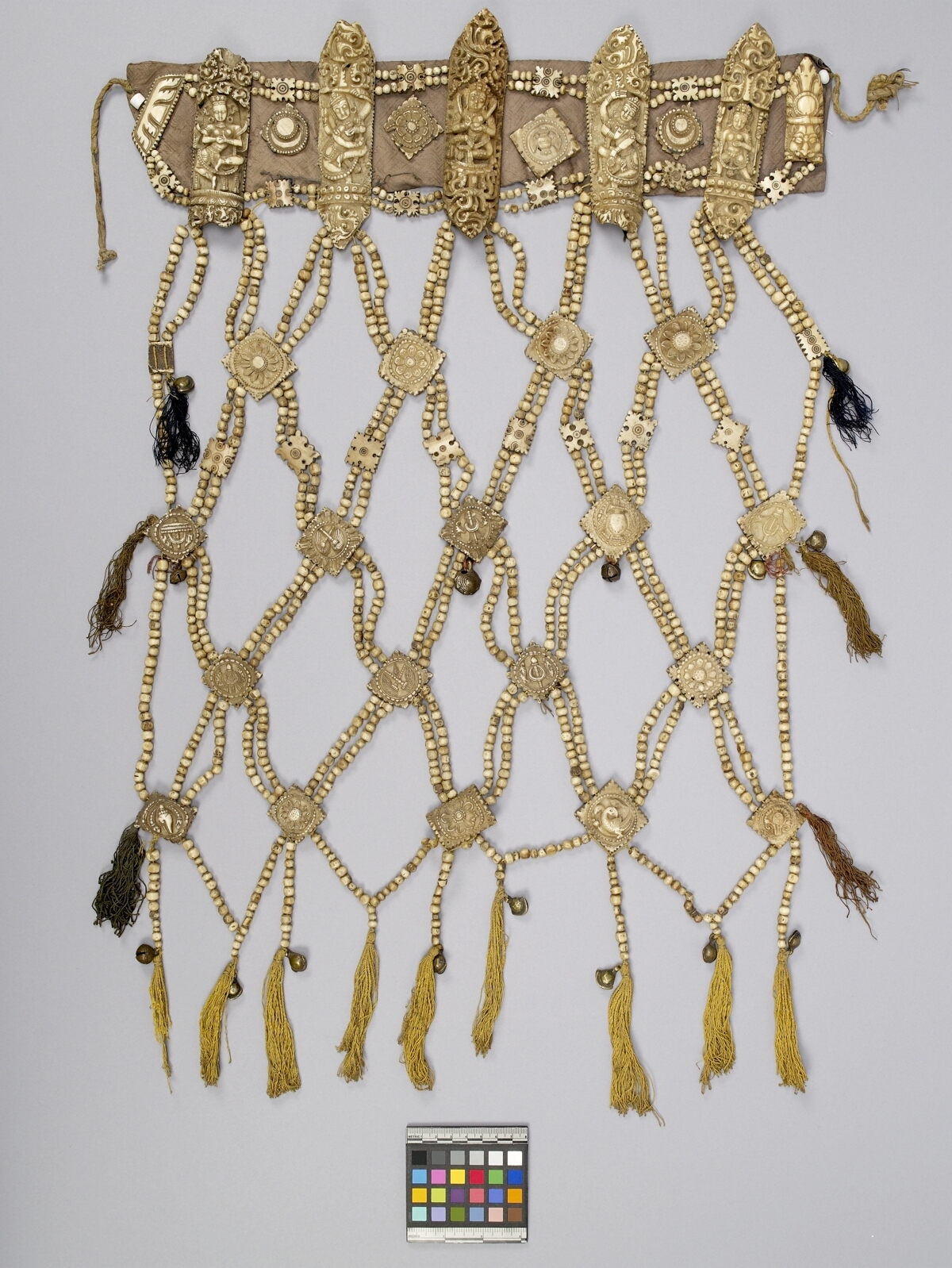
Tibetan ritual bone ornaments are known as rus rgyan (སྣམ་བུ). It is a bone apron with five rectangular medallions at the top that are elaborately carved with human figures. These are connected by horizontal double strands of bone beads and several smaller medallions of varying shape. Hanging vertically from this material are varying numbers of strands of bone beads which are joined and divided by 28 carved square medallions of varying size and pattern. Some of the designs are flowers, birds, shells, and concentric circles. All beads and medallions are a light brown and yellow colour with some dark brown patches. There are 15 tassels and 15 balls attached to the apron at the edges.
Ritual bone objects such as bone bead aprons, breast covers and ornaments are worn as funerary dancing clothes in Tibetan Buddhism.
ZooMs collagen analysis determined bones to be water buffalo and yak
Human remains in museum collections present a complex, ethical challenge. Objects made from human remains are often removed from their cultural context and have been misidentified or misunderstood, frequently without recognizing the significance they hold in cultures that use human bones for ritual and ceremonial purposes. Ritual objects made both from human and animal bones are a distinctive feature of Tibetan tantric Buddhism. To Tibetans, human bones serve as a reminder of life’s brevity and the inevitability of death. Bones have additional symbolic dimensions. Tibetans view skulls as natural containers that, unshaped by human hands, represent the inherent goodness that reflects the natural state of the mind. Tibetan Buddhists often donated their skulls and bones to monasteries in order to gain spiritual merit after their death.
Let the RRN community answer your questions
Public
With an account, you can ask other users a question about this item. Request an Account
Share your knowlege of this item with the RRN community
Public
With an account, you can submit information about this item and have it visible to all users and institutions on the RRN. Request an Account


 RRN ID