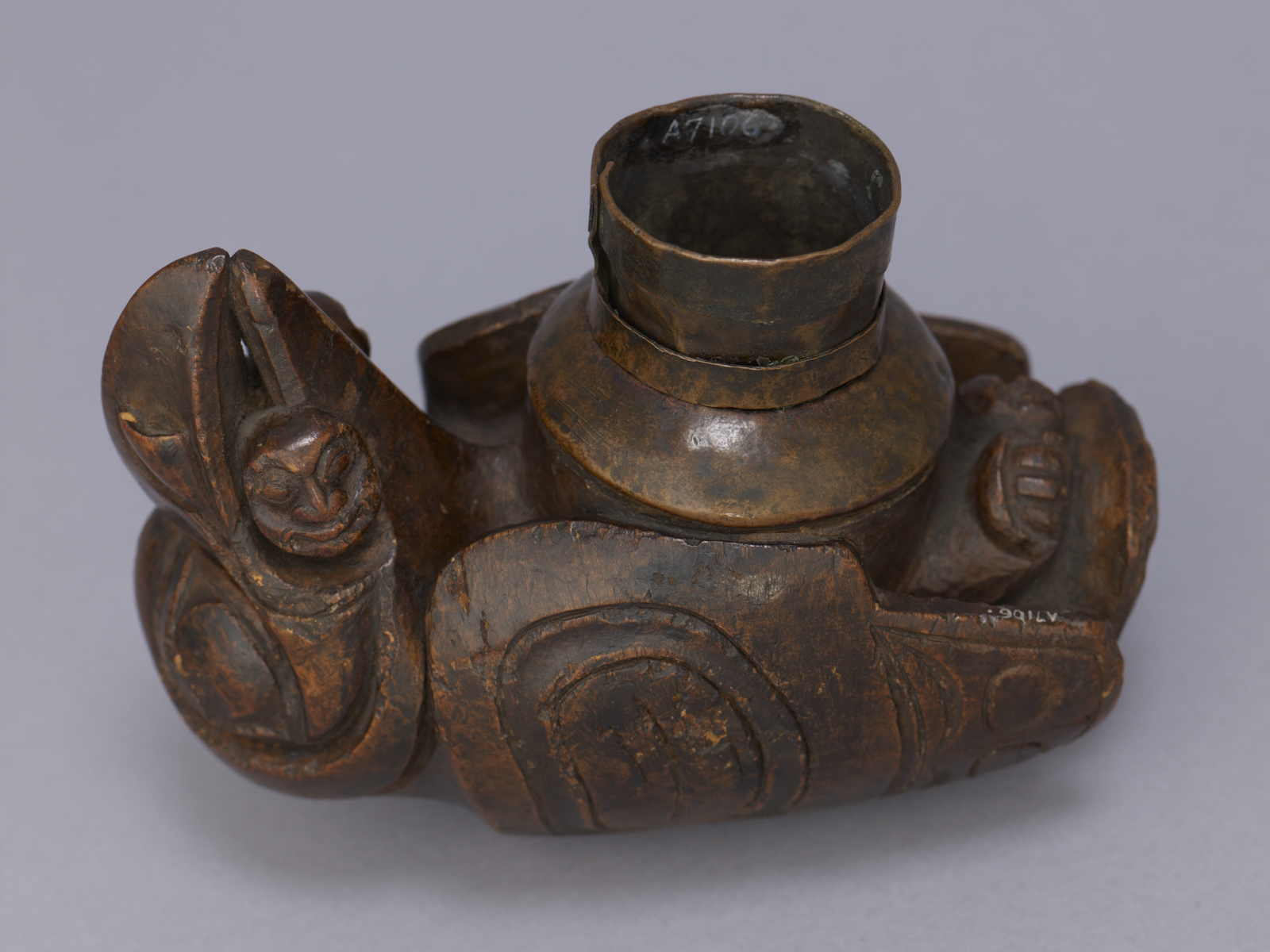
Pipe
Item number 3260/35 from the MOA: University of British Columbia.
Item number 3260/35 from the MOA: University of British Columbia.
 Public
This page shows all the information we have about this item. Both the institution that physically holds this item, and RRN members have contributed the knowledge on this page. You’re looking at the item record provided by the holding institution. If you scroll further down the page, you’ll see the information from RRN members, and can share your own knowledge too.
The RRN processes the information it receives from each institution to make it more readable and easier to search. If you’re doing in-depth research on this item, be sure to take a look at the Data Source tab to see the information exactly as it was provided by the institution.
These records are easy to share because each has a unique web address. You can copy and paste the location from your browser’s address bar into an email, word document, or chat message to share this item with others.
This information was automatically generated from data provided by MOA: University of British Columbia. It has been standardized to aid in finding and grouping information within the RRN. Accuracy and meaning should be verified from the Data Source tab.
Pipe bowl in the shape of a raven lying on its back. Small three-dimensionally carved faces are at both sides of the beak. The pipe bowl, in the bird's stomach, has a copper insert. The stem hole is at the feet.
With the introduction of commercial tobacco by Europeans in the late 18th century, Tlingit and Haida carvers began to create an imaginative range of wooden pipes. These usually represented clan crests, and were meant for honoured guests to use at ceremonial occasions, including feasts and potlatches that honoured the deceased. The pipes were often made of walnut and other non-native woods which, along with their metal components, were recycled from trade rifles that were beyond repair. During smoking, this large, heavy pipe would have been held as though the raven is lying on its back; the pipe bowl with copper insert rises from the bird’s belly, and the stem hole doubles as a small human’s open mouth at the raven’s feet.
Hardwoods were used on the pipes because they were stronger and did not burn. The density of the wood gives better detail, allowing for really deep and crisp lines [Dempsey Bob – Tahltan/Tlingit, 2019].
Lt. George T. Emmons collected the pipe, presumably in Alaska; in 1910 he sold it to George Gustav Heye, founder of the Museum of the American Indian, New York. In 1972 that museum made an exchange of the pipe with art dealer James Economos, and it was then sold to Dominique and John deMenil. In 1997 Adelaide DeMenil sold it at a Sotheby's NY auction, where it was purchased by Elspeth McConnell. Sotheby's was told by DeMenil that it was collected by G.T. Emmons in 1882, from a high-ranking Tlingit man named Nishox.
Let the RRN community answer your questions
Public
With an account, you can ask other users a question about this item. Request an Account
Share your knowlege of this item with the RRN community
Public
With an account, you can submit information about this item and have it visible to all users and institutions on the RRN. Request an Account


 RRN ID