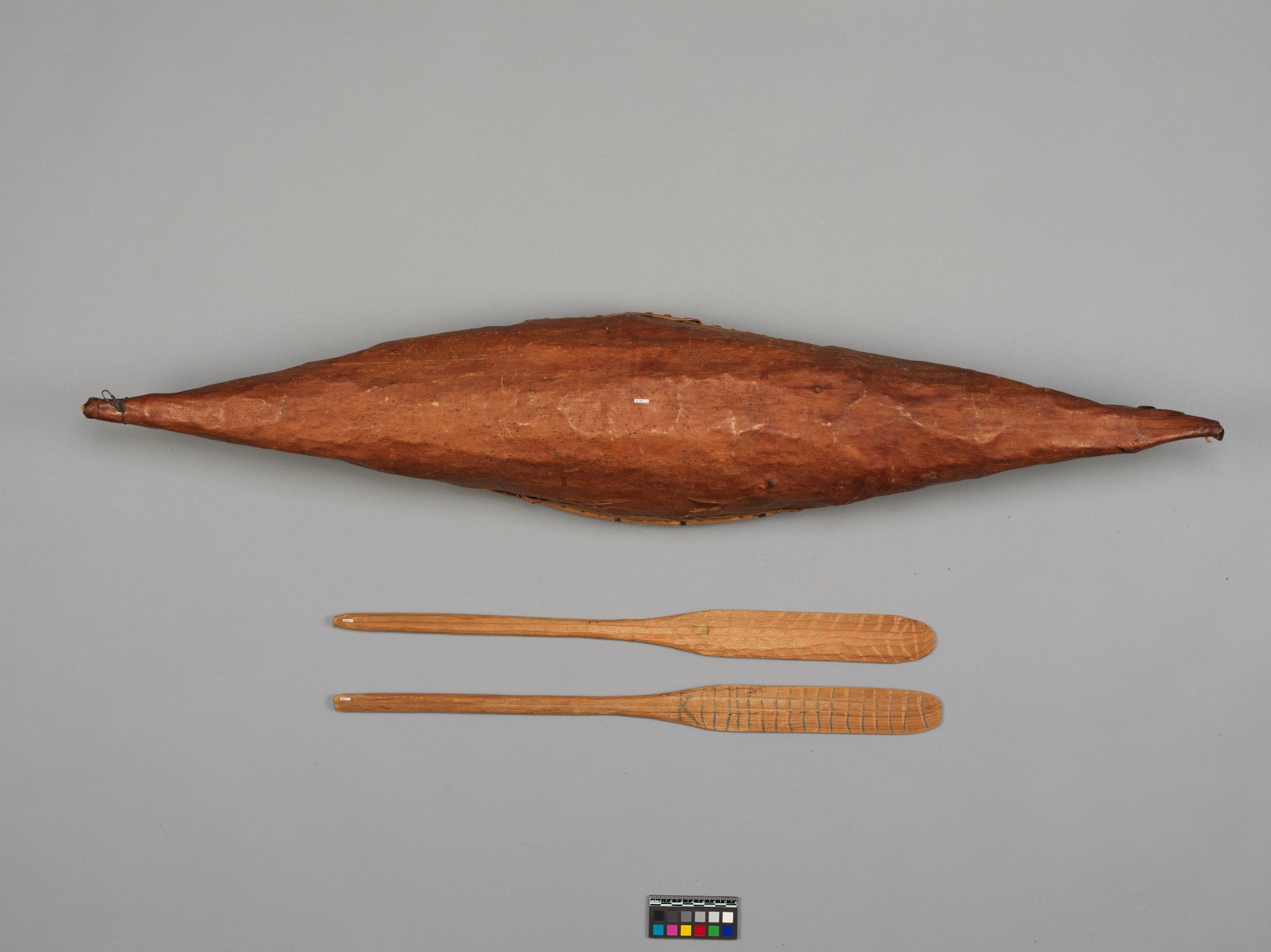
Model Canoe
Item number 3635/1 a-c from the MOA: University of British Columbia.
Item number 3635/1 a-c from the MOA: University of British Columbia.
 Public
This page shows all the information we have about this item. Both the institution that physically holds this item, and RRN members have contributed the knowledge on this page. You’re looking at the item record provided by the holding institution. If you scroll further down the page, you’ll see the information from RRN members, and can share your own knowledge too.
The RRN processes the information it receives from each institution to make it more readable and easier to search. If you’re doing in-depth research on this item, be sure to take a look at the Data Source tab to see the information exactly as it was provided by the institution.
These records are easy to share because each has a unique web address. You can copy and paste the location from your browser’s address bar into an email, word document, or chat message to share this item with others.
This information was automatically generated from data provided by MOA: University of British Columbia. It has been standardized to aid in finding and grouping information within the RRN. Accuracy and meaning should be verified from the Data Source tab.
Model sturgeon-nosed bark canoe (part a) with two model wooden paddles (parts b-c). Canoe hull has a long, pointed bow and stern, creating sharp angles at the opening. The body is shaped with rib and slat frames, lashed together with bark and plant fibre. There is metal wire along the underside of the stern, and a small hide tie towards the middle of canoe (left side). There is one thwart across the middle of the canoe opening. Paddles have rectangular blades with flattened handles; designs painted in light red and dark blue across front and back of blades. Smaller paddle (part b) has connected diamonds with crosses through them on front; horizontal stripes across back. Larger paddle (part c) has zigzags painted and incised across front of blade; chevrons across back.
The slats are made of cedar; the lashes from cherry bark; the ribs and wood forming the frame are maple; the hull is made from the inner surface of birch bark; and the small holes in the hull have been sealed with fir pitch (Troy Hunter, 2025).
From 1919 - 1936 the donors' grandfather, Richard G. Newton was superintendent of an Agricultural Experimental Station in Windemere, BC. After that they moved to Prince George, where Newton was assigned to direct an Experimental Farm in Pineview. The grandparents later retired in Chilliwack. The two donors, Hart and Brooks, inherited the collection from their father.
Let the RRN community answer your questions
Public
With an account, you can ask other users a question about this item. Request an Account
Share your knowlege of this item with the RRN community
Public
With an account, you can submit information about this item and have it visible to all users and institutions on the RRN. Request an Account




 RRN ID