Mask
Item number A8367 from the MOA: University of British Columbia.
Item number A8367 from the MOA: University of British Columbia.
 Public
This page shows all the information we have about this item. Both the institution that physically holds this item, and RRN members have contributed the knowledge on this page. You’re looking at the item record provided by the holding institution. If you scroll further down the page, you’ll see the information from RRN members, and can share your own knowledge too.
The RRN processes the information it receives from each institution to make it more readable and easier to search. If you’re doing in-depth research on this item, be sure to take a look at the Data Source tab to see the information exactly as it was provided by the institution.
These records are easy to share because each has a unique web address. You can copy and paste the location from your browser’s address bar into an email, word document, or chat message to share this item with others.
This information was automatically generated from data provided by MOA: University of British Columbia. It has been standardized to aid in finding and grouping information within the RRN. Accuracy and meaning should be verified from the Data Source tab.
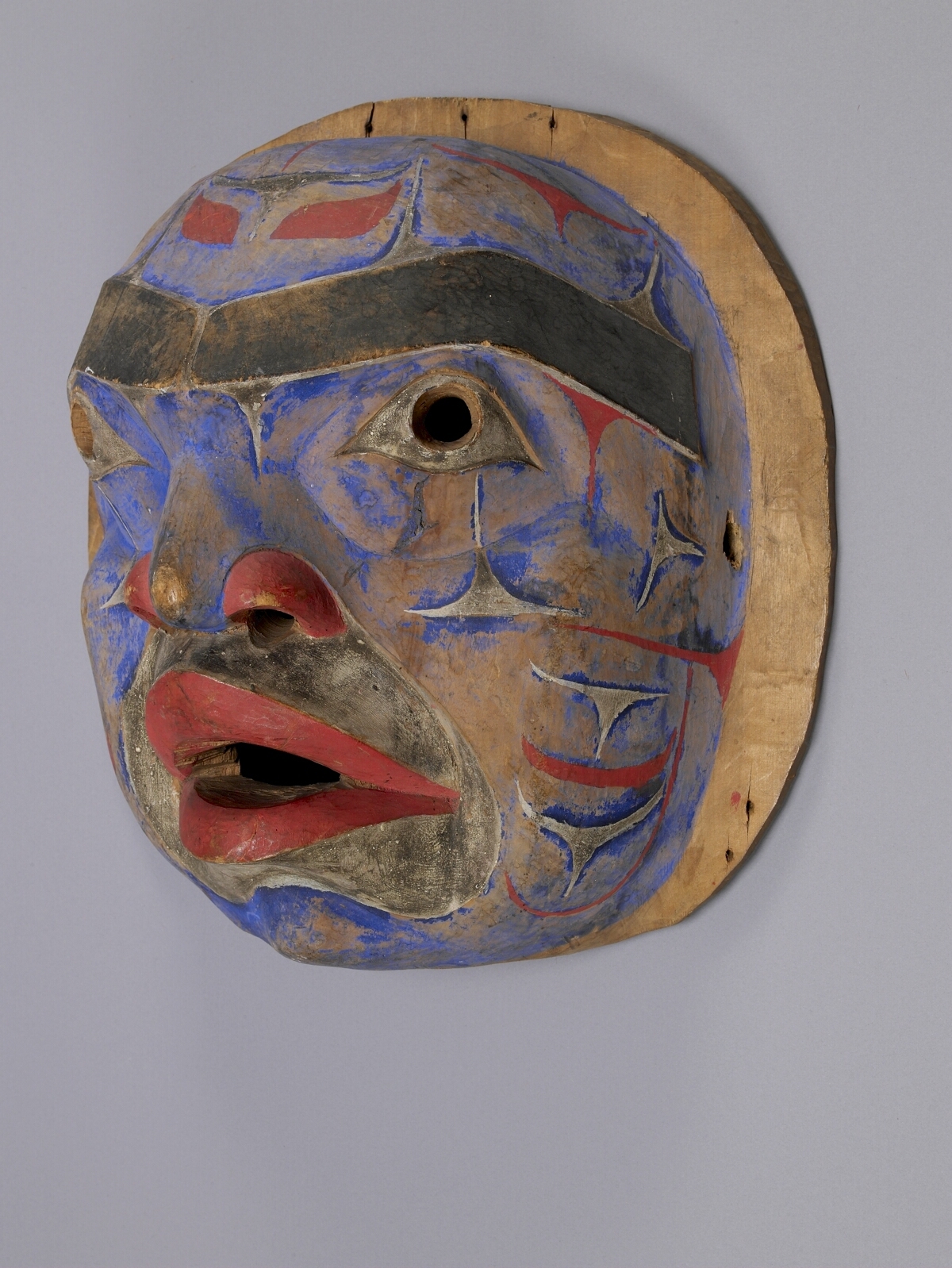
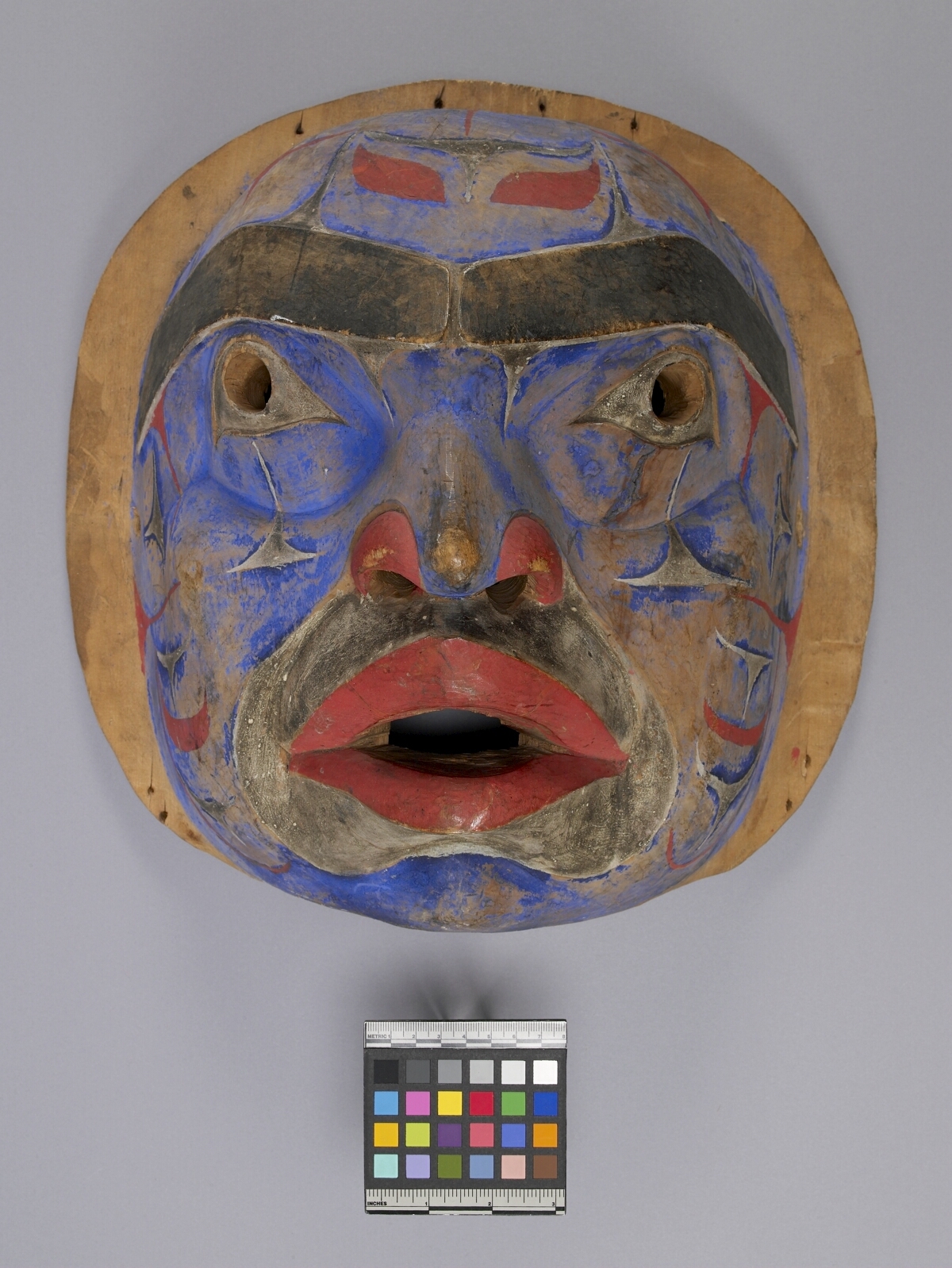
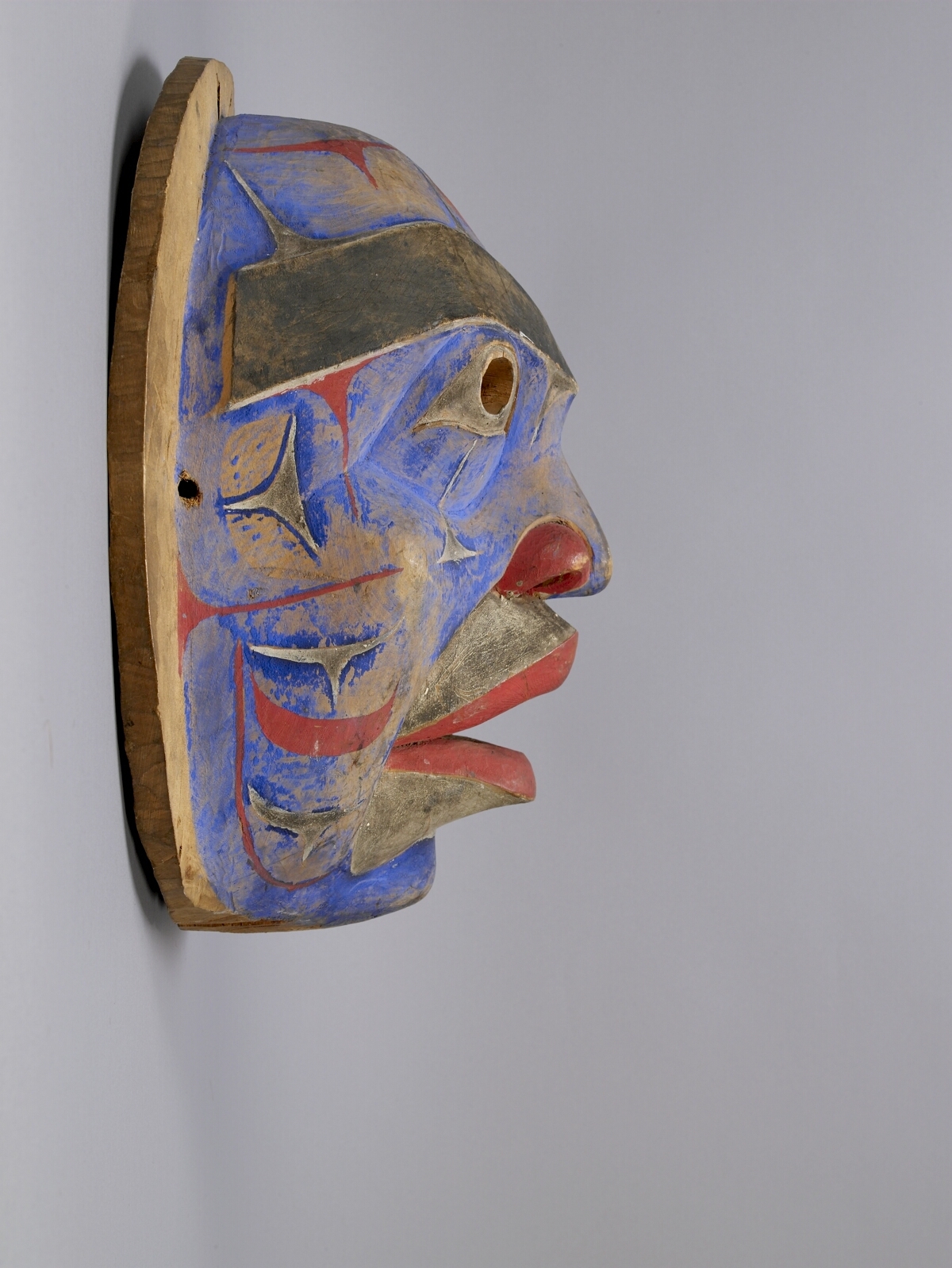
Large round mask with high relief face and features. Round eyes, opened mouth. Tear drops from the eyes. Painted in "Bella Coola blue", ochre, red and black. The edges have holes and are unpainted, where it used to attach behind a large round wooden corona.
Sun mask. Previously thought to be a moon mask, however, recently this mask was discovered to have once had a large, round corona attached to it, so it is most likely a sun mask. In the 1920s, Harlan I. Smith had photographed the corona attached to the mask. However the corona ended up in the collection of the Seattle Art Museum (SAM) with a different mask nailed to the inside. It is unknown how the original mask and corona became separated, but at some point a new mask was nailed into the corona and the original inside mask was sold separately. The corona was loaned to MOA in early 2012 so that the two pieces could be reunited in an exhibition.
Sun mask; Sinxolatla is one of the names for the Nuxalk sun, who is a supernatural being.
In 1959 John Davenport Clayton sold this collection of Bella Coola belongings (A8360-A8376) to the Campbell River Historical Society (Museum). The collection comprised 17 masks, headdresses, and other ceremonial items, as well as 3 cedar boxes. In 1963 the Campbell River Museum sold the 17 masks and ceremonial items to MOA (not the boxes). Objects in this collection may have come from Nuxalk households via sale, or exchange (as collateral towards money owed on goods purchased at the store), or may have been placed with the Claytons for secure storage during a time of floods and fires, and ended up remaining with the Clayton family?
Let the RRN community answer your questions
Public
With an account, you can ask other users a question about this item. Request an Account
Share your knowlege of this item with the RRN community
Public
With an account, you can submit information about this item and have it visible to all users and institutions on the RRN. Request an Account



 RRN ID