Bow
Item number Na992 from the MOA: University of British Columbia.
Item number Na992 from the MOA: University of British Columbia.
 Public
This page shows all the information we have about this item. Both the institution that physically holds this item, and RRN members have contributed the knowledge on this page. You’re looking at the item record provided by the holding institution. If you scroll further down the page, you’ll see the information from RRN members, and can share your own knowledge too.
The RRN processes the information it receives from each institution to make it more readable and easier to search. If you’re doing in-depth research on this item, be sure to take a look at the Data Source tab to see the information exactly as it was provided by the institution.
These records are easy to share because each has a unique web address. You can copy and paste the location from your browser’s address bar into an email, word document, or chat message to share this item with others.
This information was automatically generated from data provided by MOA: University of British Columbia. It has been standardized to aid in finding and grouping information within the RRN. Accuracy and meaning should be verified from the Data Source tab.
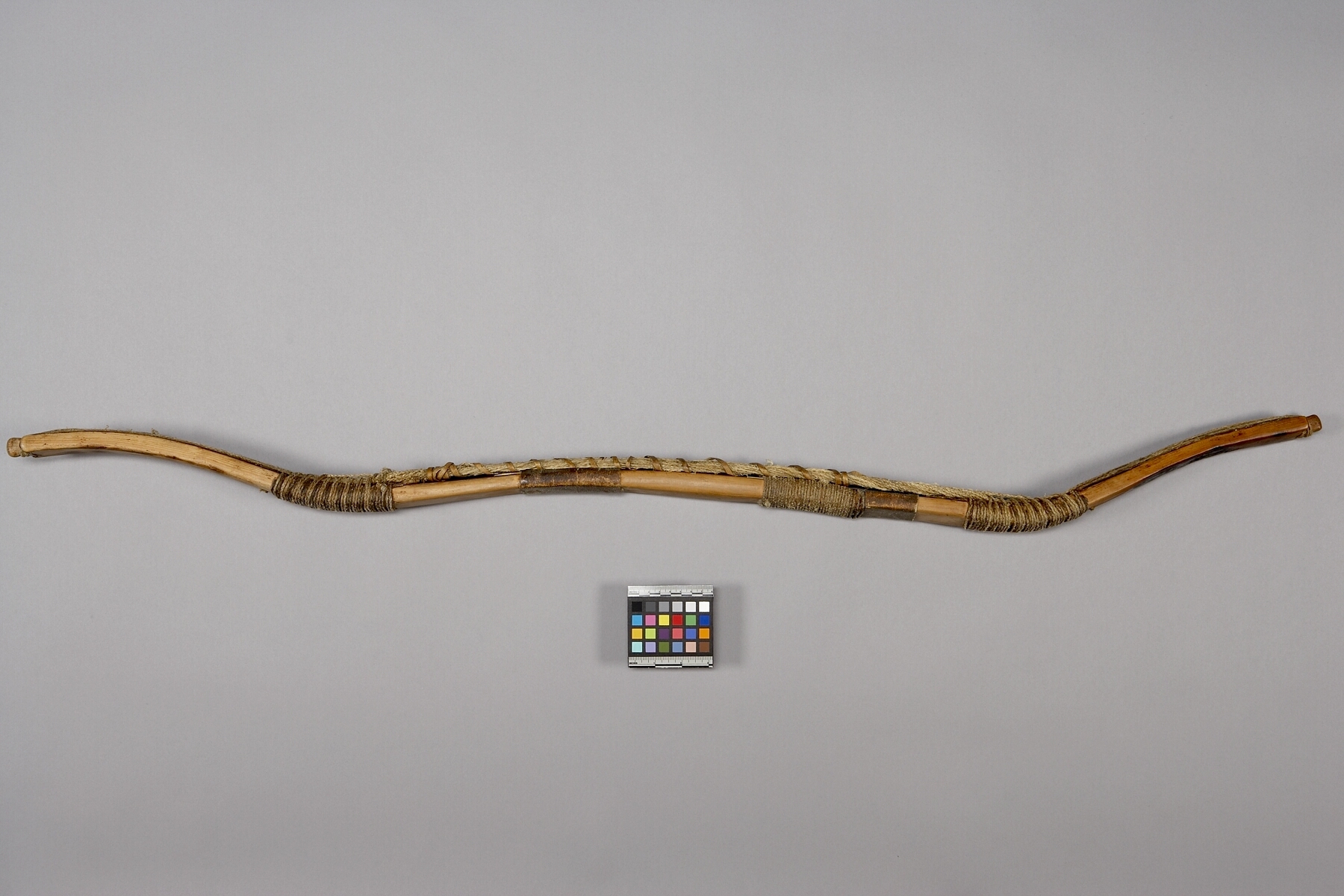
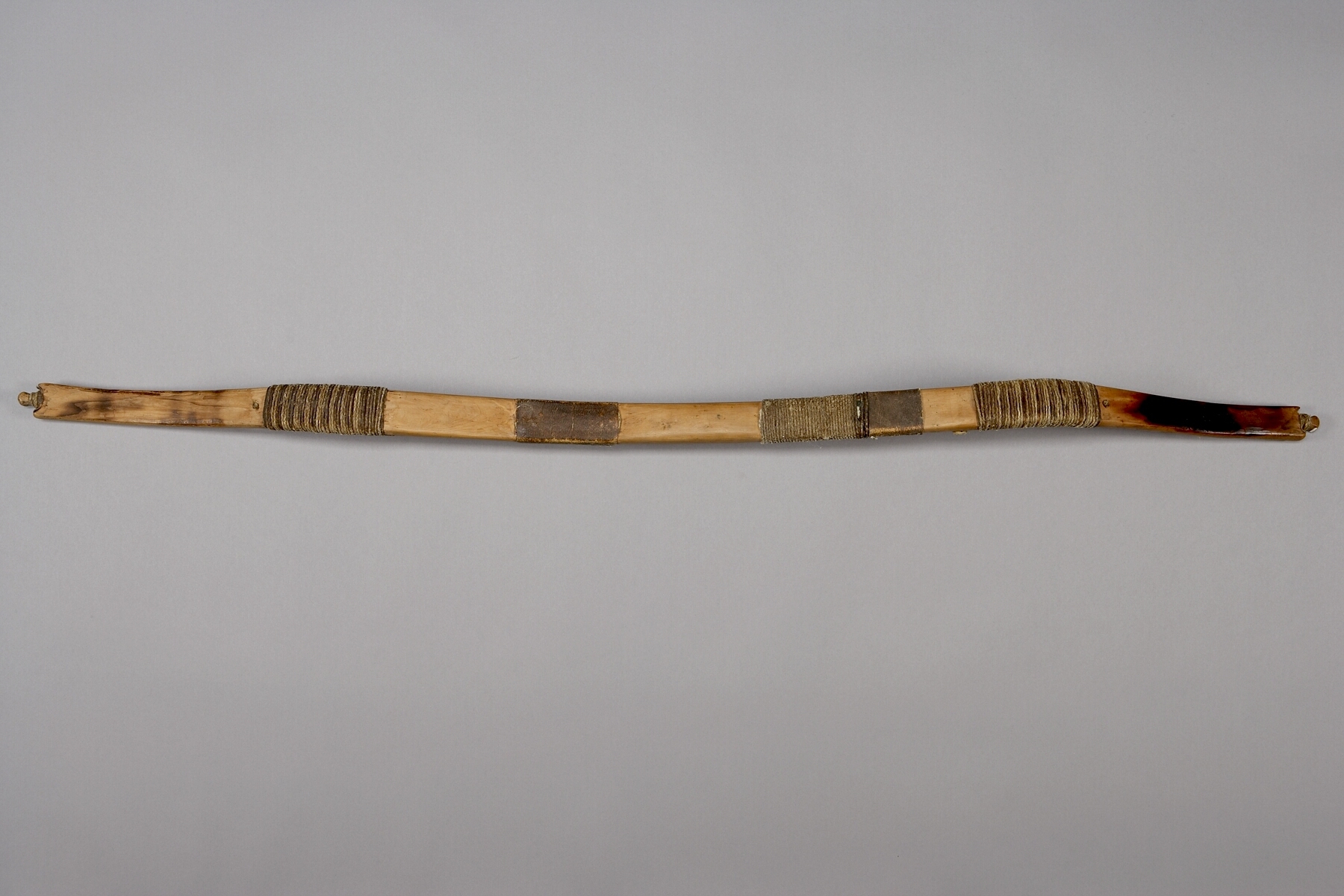
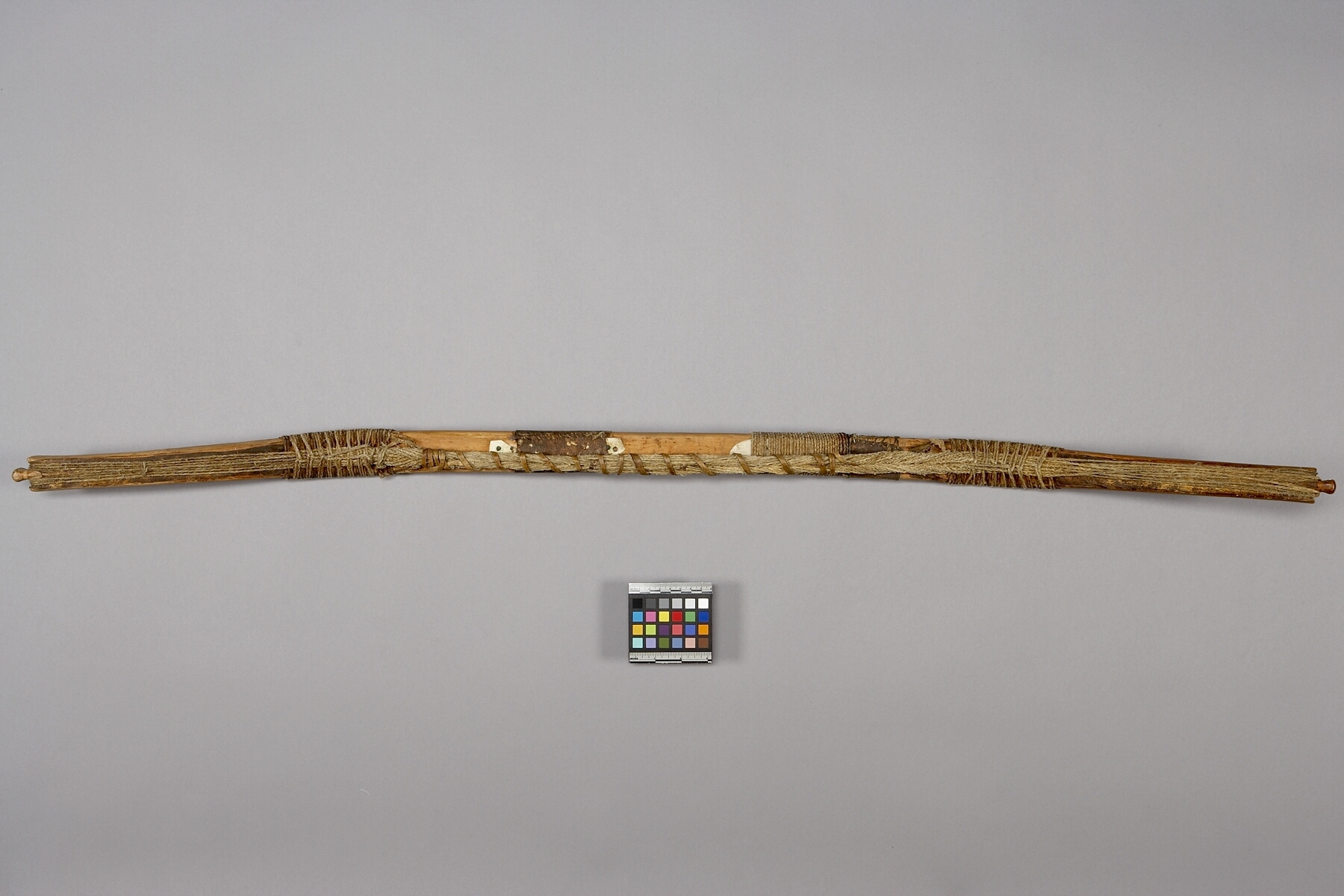
Cable-backed bow made from wood and other materials. There are 2 places where thin pieces of bone have been attached to either side of the wood with copper pins, one has sealskin sewn over the top of the bone, and the other has sinew lashed over it. There are knobs on either end of the bow, around which 8 braided sinew cords are strung. The cords are lashed onto the wood in 2 places, and they are twisted and wound with sealskin in the middle section. (Bow string no longer attached.)
Bows were used for hunting land animals such as caribou and birds, and occasionally for warfare.
Said to have been collected in the MacKenzie District, southwest of Victoria Island and northeast of Bear Lake.
Cable-backed bows are bows reinforced with a braided cable along the back. Cables are attached to the bow at intervals, and tightened once placed. They decrease pressure on the bow’s back, increase its strength, and decrease its chance of breaking. The tighter the cable, the greater these effects. Cable-backed bows can have a variety of profile shapes: recurve, straight, etc.
Let the RRN community answer your questions
Public
With an account, you can ask other users a question about this item. Request an Account
Share your knowlege of this item with the RRN community
Public
With an account, you can submit information about this item and have it visible to all users and institutions on the RRN. Request an Account


 RRN ID