Owl Figure
Item number 2731/178 from the MOA: University of British Columbia.
Item number 2731/178 from the MOA: University of British Columbia.
 Public
This page shows all the information we have about this item. Both the institution that physically holds this item, and RRN members have contributed the knowledge on this page. You’re looking at the item record provided by the holding institution. If you scroll further down the page, you’ll see the information from RRN members, and can share your own knowledge too.
The RRN processes the information it receives from each institution to make it more readable and easier to search. If you’re doing in-depth research on this item, be sure to take a look at the Data Source tab to see the information exactly as it was provided by the institution.
These records are easy to share because each has a unique web address. You can copy and paste the location from your browser’s address bar into an email, word document, or chat message to share this item with others.
This information was automatically generated from data provided by MOA: University of British Columbia. It has been standardized to aid in finding and grouping information within the RRN. Accuracy and meaning should be verified from the Data Source tab.
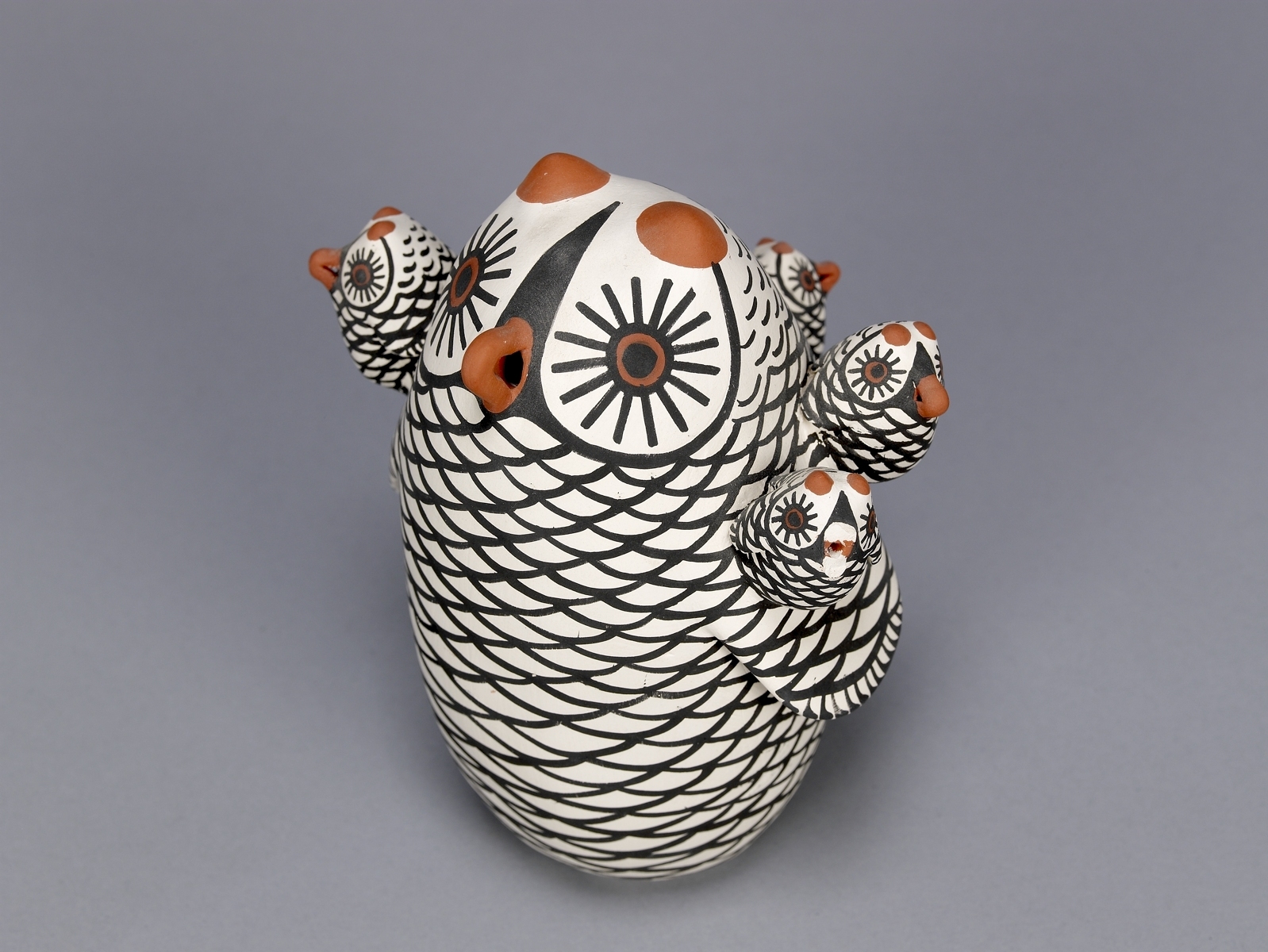
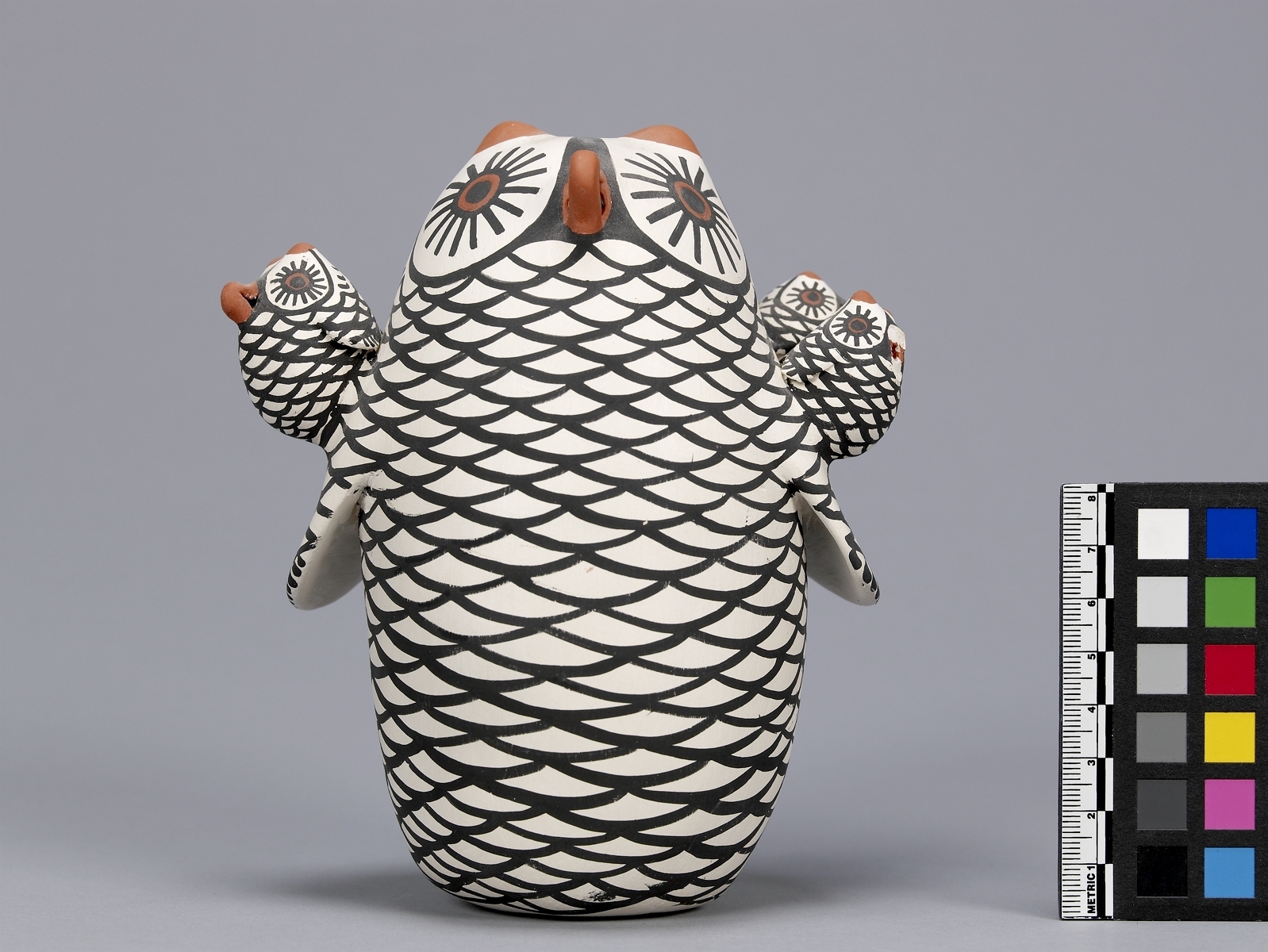
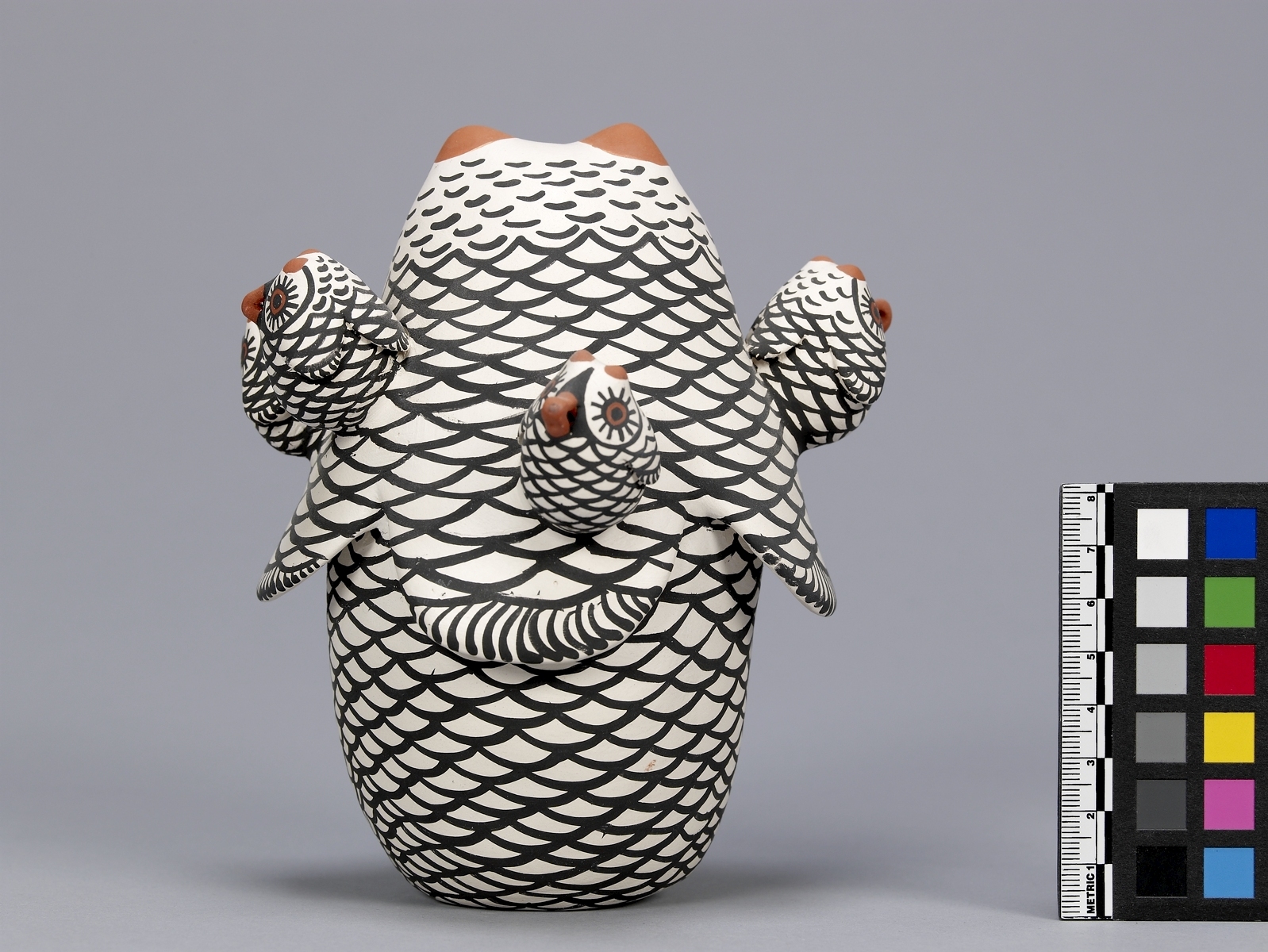
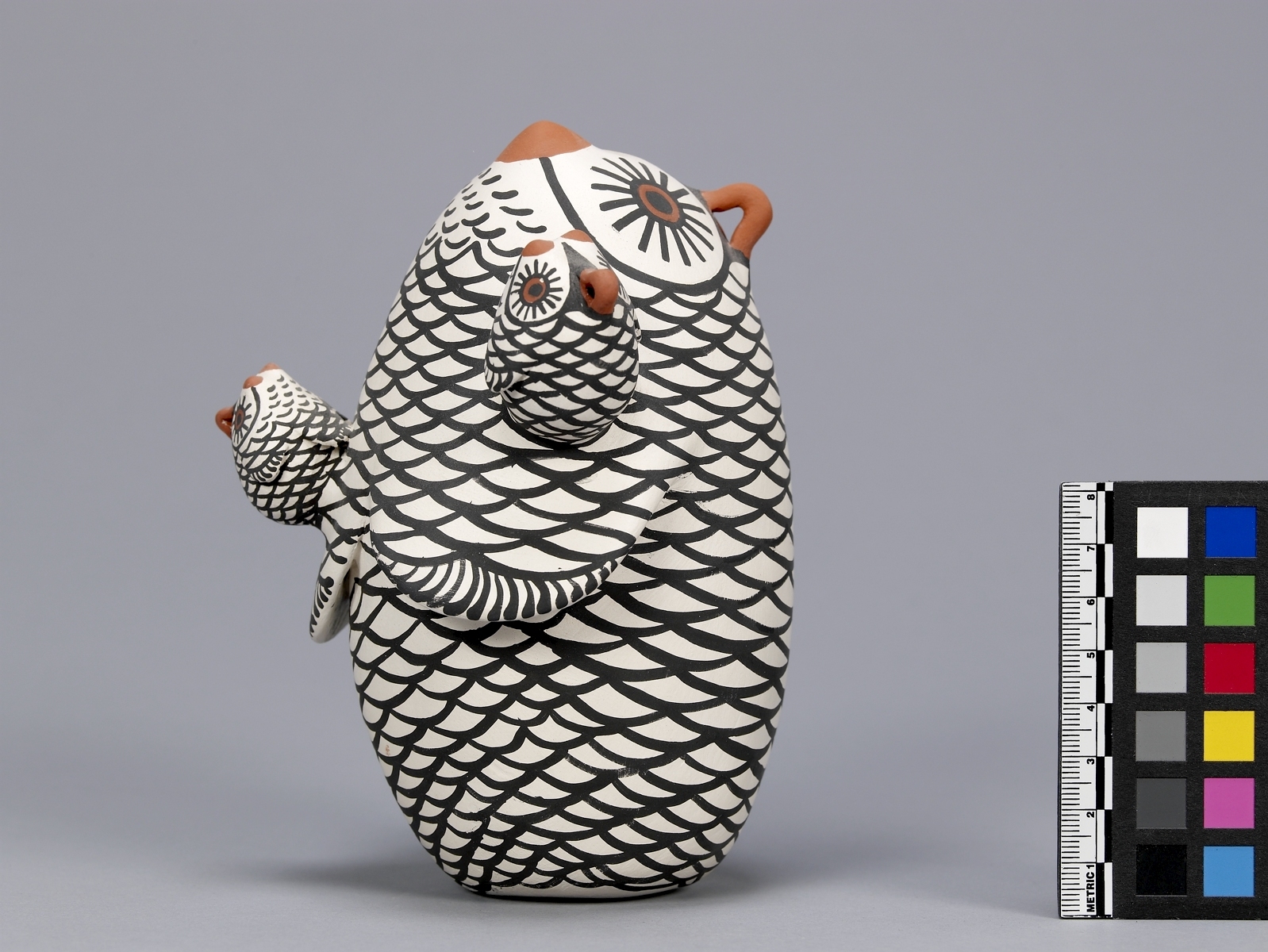
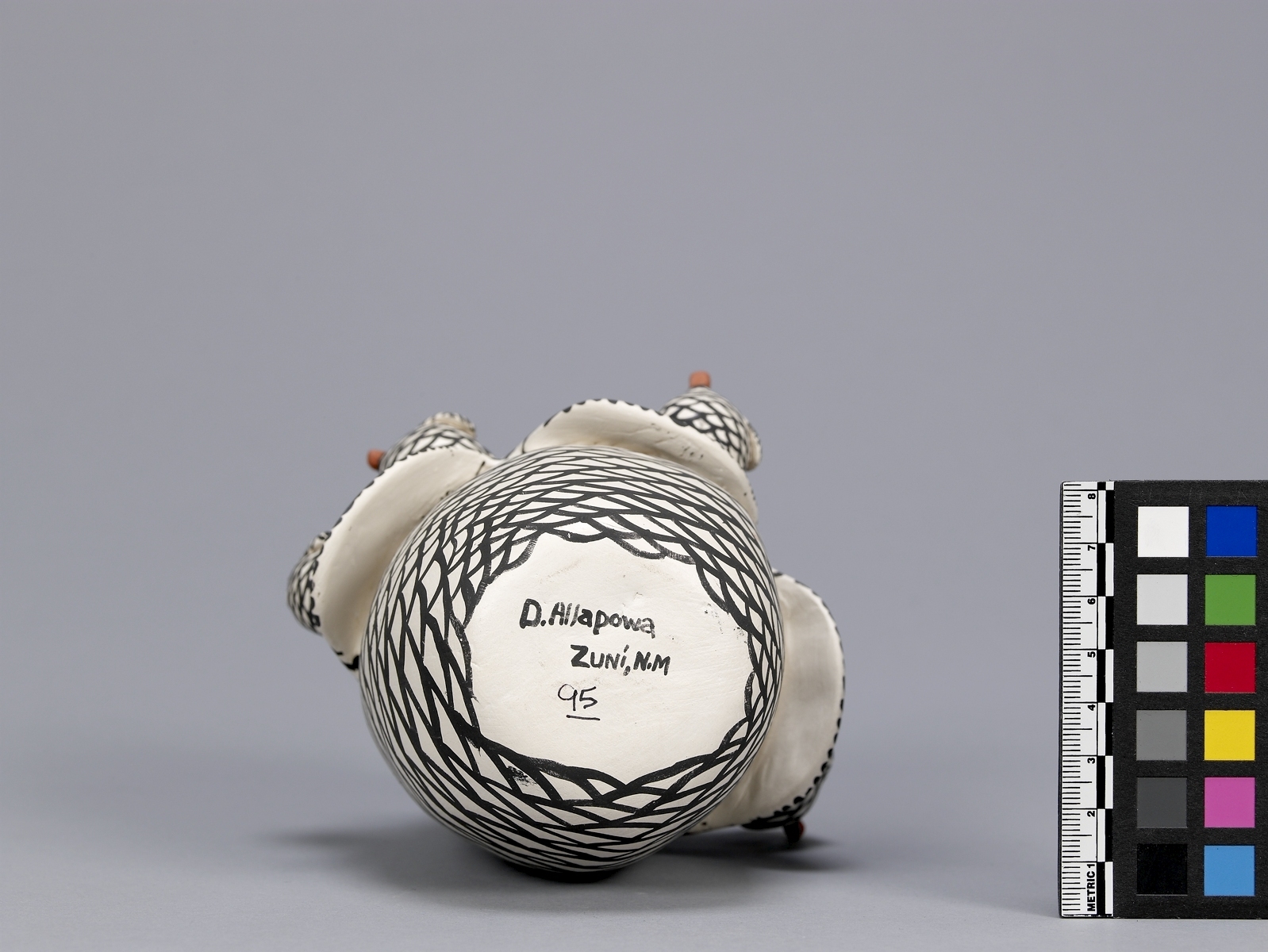
Large, egg-shaped white clay owl with four replica baby owls, two sitting on the left wing, one on the tail, and one the right wing. Bodies are slipped and burnished, with details hand painted in black and orange. Face area is thickly outlined, divided into to by the tiny loop beak and filled by the eyes with long lashes. Wings and tail have a small border of stripes at the edge, curly feathers extend down the back of the headand the rest of the body is covered tight-knit mesh feathers.
Pottery owls became important tourist items when the railroad and then Route 66 allowed for large numbers of tourists to travel to the Southwest. This collection of 192 Zuni pottery owls includes examples from before 1900 through 2006. Zuni potters continue to make owls and family traditions in the medium continue. While many younger potters are innovating, the owls are distinctly Zuni.
In traditional Zuni lore, the owl is considered a wise guardian and protector. An owl’s ability to see at night means that it sees what others cannot, giving it understanding of the spiritual and physical world.
Let the RRN community answer your questions
Public
With an account, you can ask other users a question about this item. Request an Account
Share your knowlege of this item with the RRN community
Public
With an account, you can submit information about this item and have it visible to all users and institutions on the RRN. Request an Account


 RRN ID