Arrow Sash
Item number 1060/77 from the MOA: University of British Columbia.
Item number 1060/77 from the MOA: University of British Columbia.
 Public
This page shows all the information we have about this item. Both the institution that physically holds this item, and RRN members have contributed the knowledge on this page. You’re looking at the item record provided by the holding institution. If you scroll further down the page, you’ll see the information from RRN members, and can share your own knowledge too.
The RRN processes the information it receives from each institution to make it more readable and easier to search. If you’re doing in-depth research on this item, be sure to take a look at the Data Source tab to see the information exactly as it was provided by the institution.
These records are easy to share because each has a unique web address. You can copy and paste the location from your browser’s address bar into an email, word document, or chat message to share this item with others.
This information was automatically generated from data provided by MOA: University of British Columbia. It has been standardized to aid in finding and grouping information within the RRN. Accuracy and meaning should be verified from the Data Source tab.
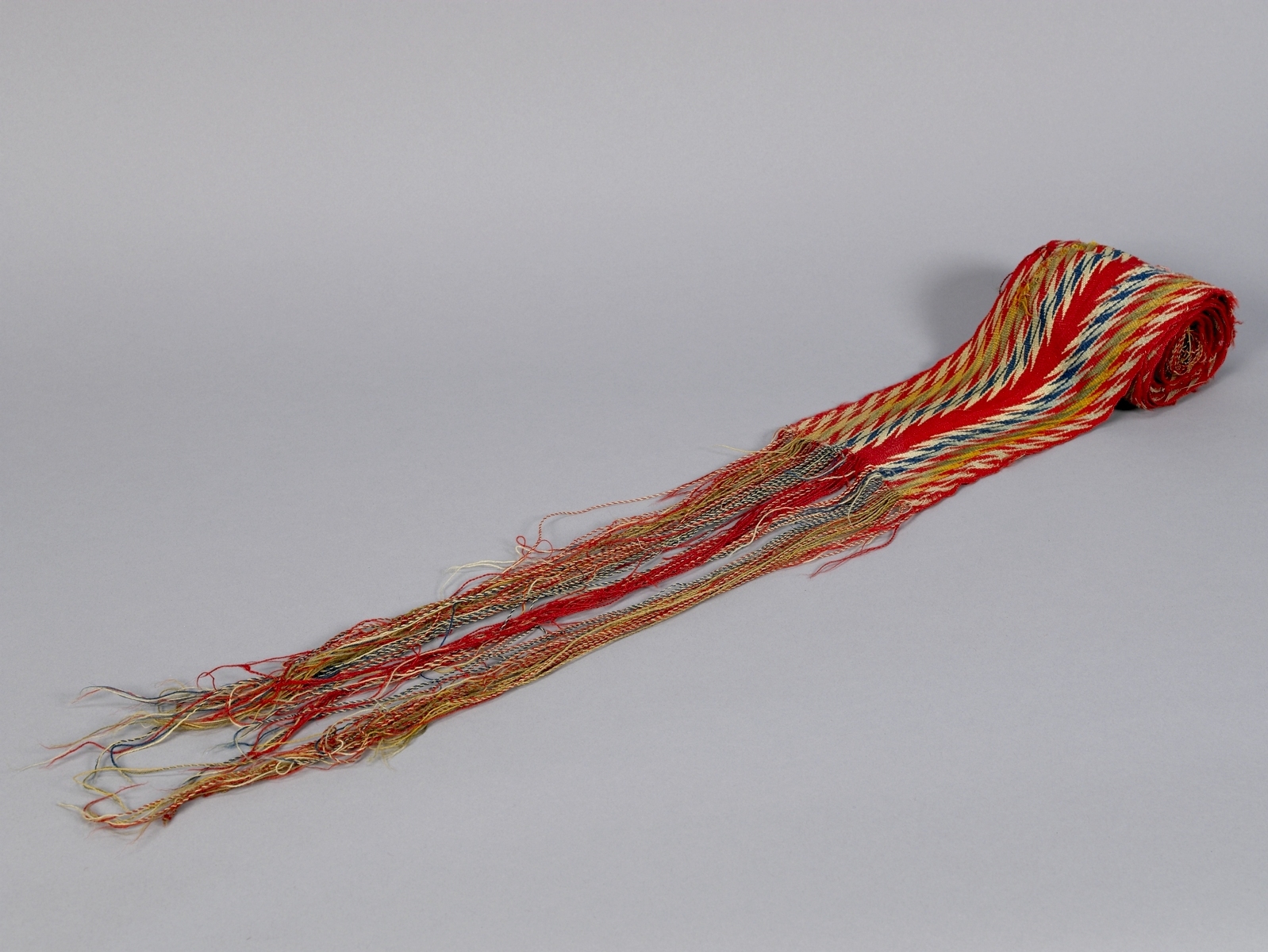
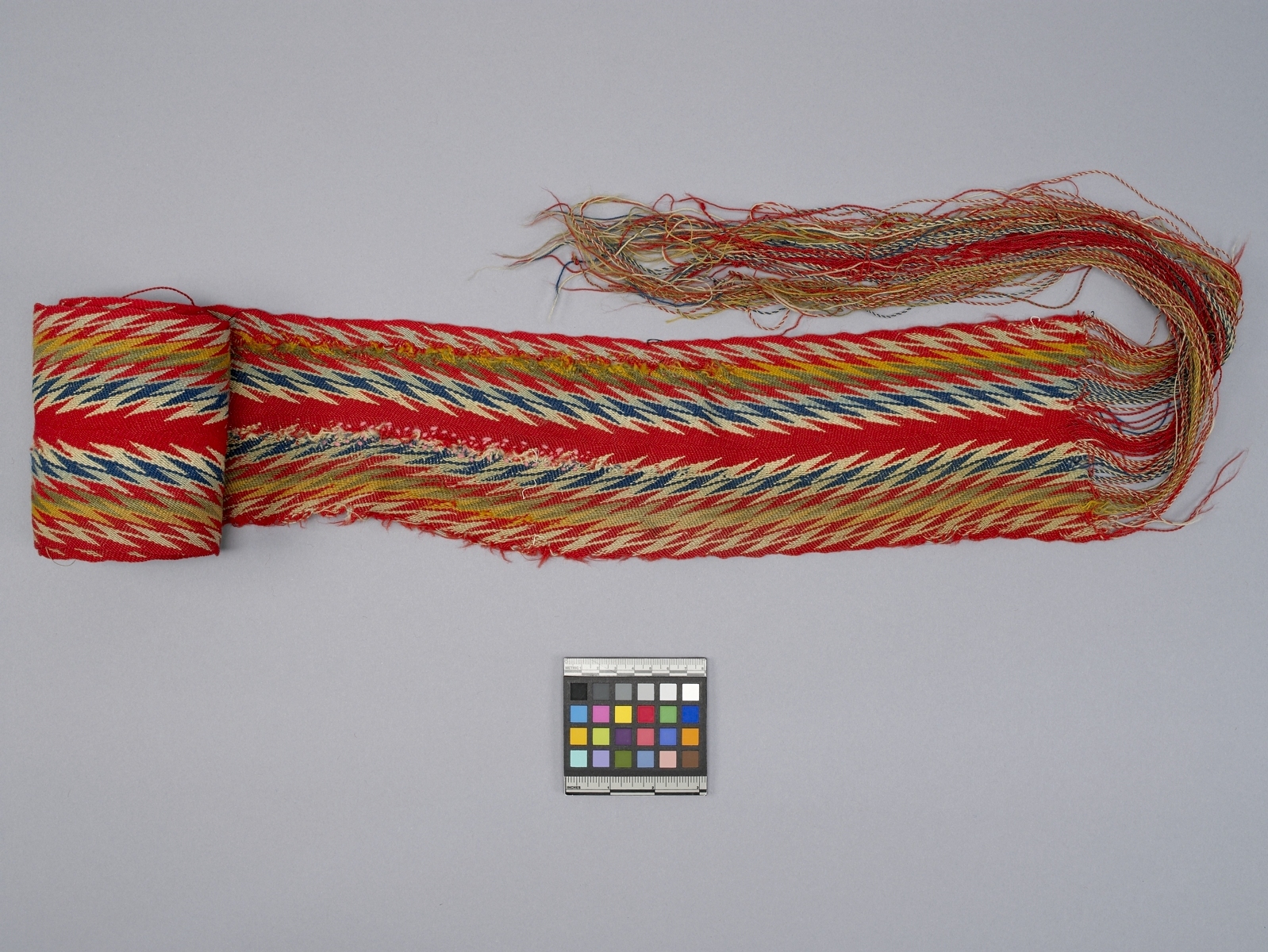
Finger woven arrow sash with multicoloured zigzag designs woven down the length. Fringe at ends. Colours used: red, white, blue, green, yellow.
The ceinture fléchée (also known as "L'Assomption sash" or "arrow sash") refers to this particular type of colourful woven sash. Métis wear them as part of their traditional regalia. They were also a traditional part of French-Canadian clothing of the 19th century, used by men to tie around their waists over jackets or coats.
The documentation from the Sisters of Saint Ann Museum says this was made in 1820 and acquired in 1916.
Yellow symbolizes prosperity, white represents the connection to the Creator, blue symbolizes water, green symbolizes earth, and red symbolizes the blood that has been, and is being spilled.
Woven from homespun and hand-dyed yarn on a standing loom.
Let the RRN community answer your questions
Public
With an account, you can ask other users a question about this item. Request an Account
Share your knowlege of this item with the RRN community
Public
With an account, you can submit information about this item and have it visible to all users and institutions on the RRN. Request an Account


 RRN ID