Mask
Item number A8376 from the MOA: University of British Columbia.
Item number A8376 from the MOA: University of British Columbia.
 Public
This page shows all the information we have about this item. Both the institution that physically holds this item, and RRN members have contributed the knowledge on this page. You’re looking at the item record provided by the holding institution. If you scroll further down the page, you’ll see the information from RRN members, and can share your own knowledge too.
The RRN processes the information it receives from each institution to make it more readable and easier to search. If you’re doing in-depth research on this item, be sure to take a look at the Data Source tab to see the information exactly as it was provided by the institution.
These records are easy to share because each has a unique web address. You can copy and paste the location from your browser’s address bar into an email, word document, or chat message to share this item with others.
This information was automatically generated from data provided by MOA: University of British Columbia. It has been standardized to aid in finding and grouping information within the RRN. Accuracy and meaning should be verified from the Data Source tab.
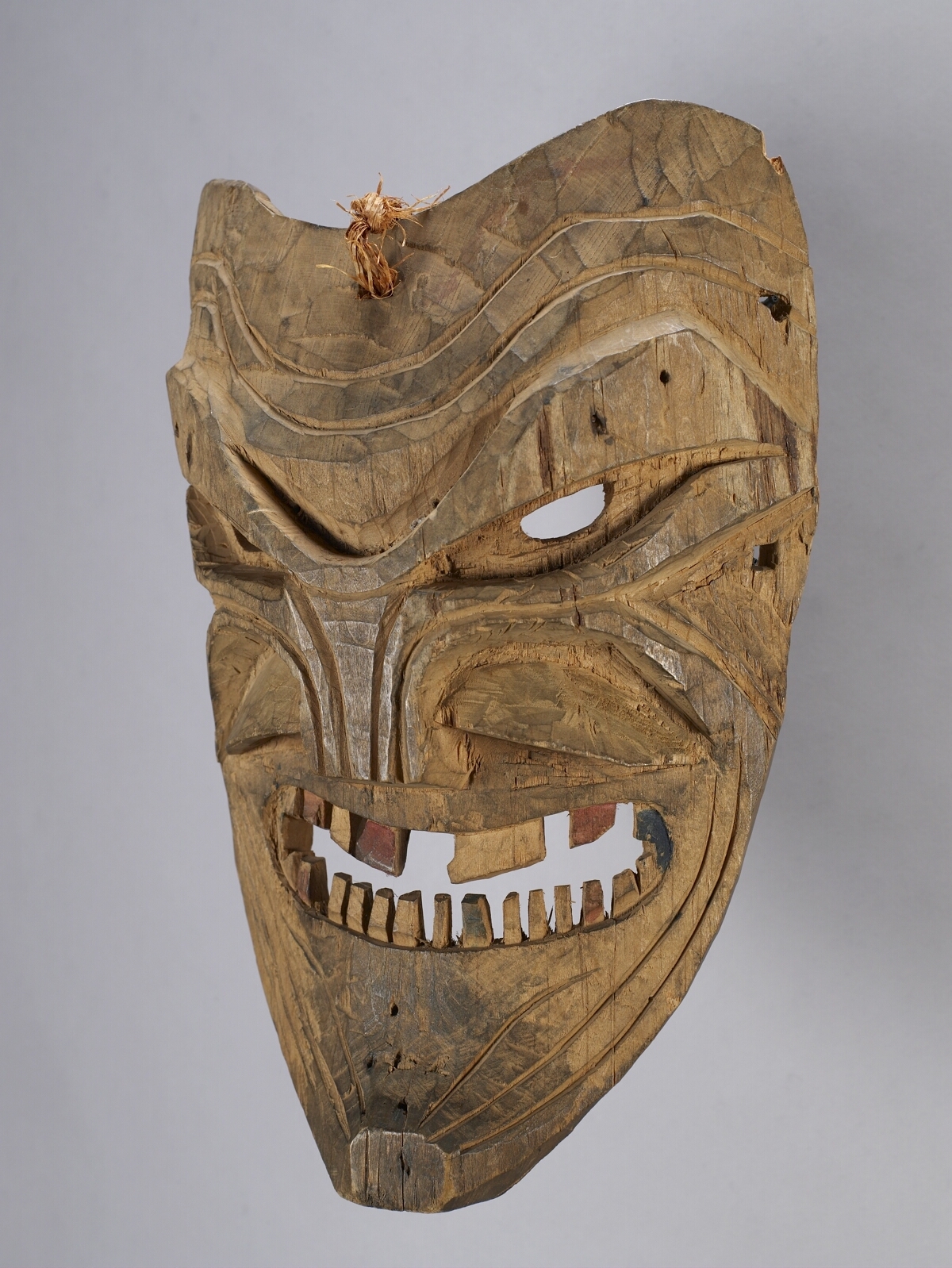
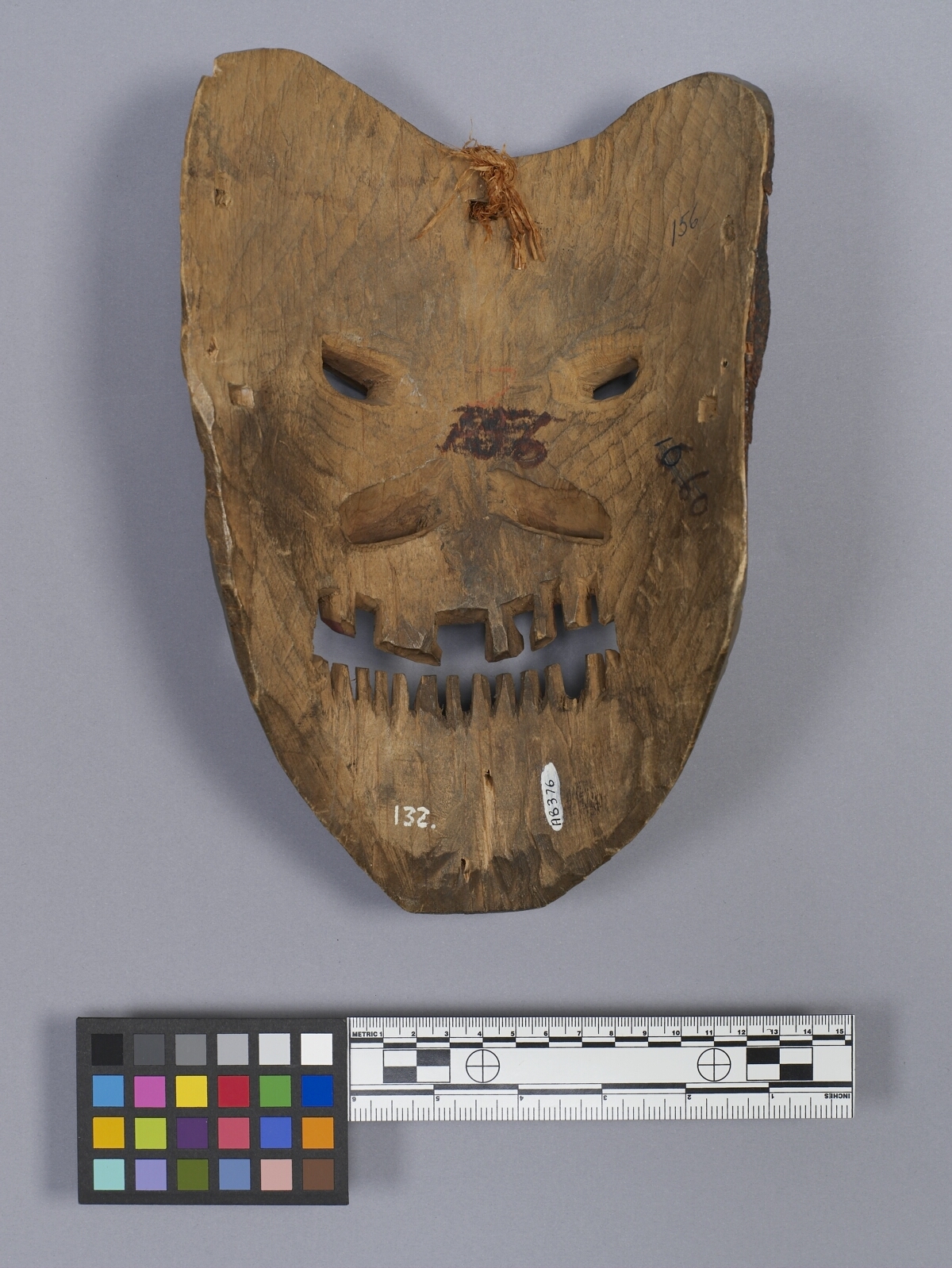
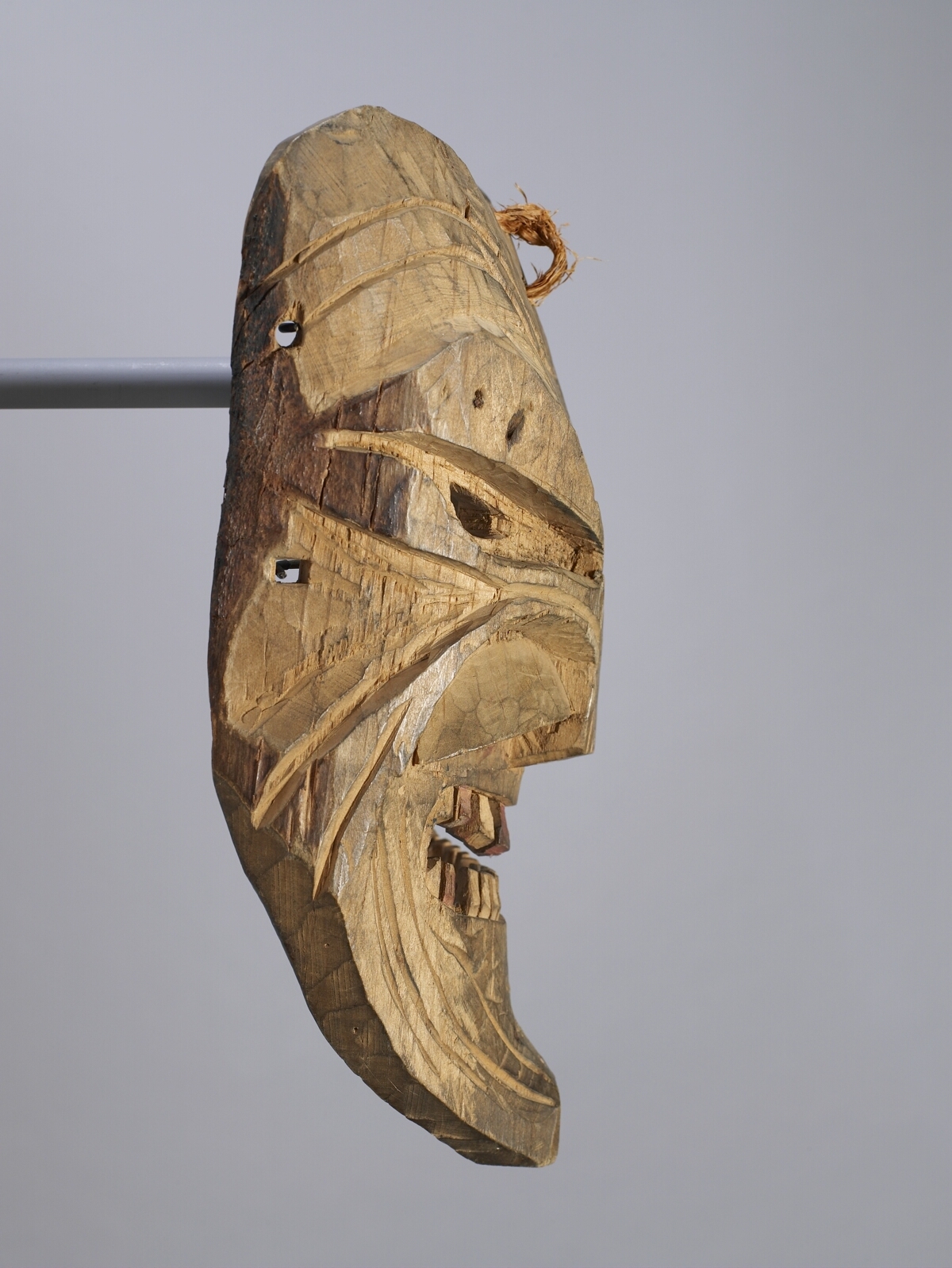
Carved mask, mostly unpainted. Male face carved with grimacing expression; some teeth missing; some painted red or black. Incised lines across forehead and double lines for nose; several lines at both sides of chin; carved out cheeks and eye areas. Loop of cedar bark through hole at top. Two rectangular-shaped holes at either side.
Nutsq'lhuus; supernatural clown or laughing face mask. Usually has missing teeth; used to make the audience feel better, in between more serious dances. The dancer uses this mask to imitate other dancers and make people laugh; still in use.
In 1959 John Davenport Clayton sold this collection of Bella Coola belongings (A8360-A8376) to the Campbell River Historical Society (Museum). The collection comprised 17 masks, headdresses, and other ceremonial items, as well as 3 cedar boxes. In 1963 the Campbell River Museum sold the 17 masks and ceremonial items to MOA (not the boxes). Objects in this collection may have come from Nuxalk households via sale, or exchange (as collateral towards money owed on goods purchased at the store), or may have been placed with the Claytons for secure storage during a time of floods and fires, and ended up remaining with the Clayton family?
Let the RRN community answer your questions
Public
With an account, you can ask other users a question about this item. Request an Account
Share your knowlege of this item with the RRN community
Public
With an account, you can submit information about this item and have it visible to all users and institutions on the RRN. Request an Account



 RRN ID